Headshot of a smiling middle-aged woman wearing a dark blazer over a blue top.

Michelle Bendeck

PhD

Professor, Laboratory Medicine and Pathobiology, University of Toronto

Research Focus Areas

  • Cell-Matrix Remodeling
  • Vascular Cell Biology

Overview

Michelle Bendeck is a Professor in the Department of Laboratory Medicine and Pathobiology at the University of Toronto and a Scientist in the Translational Biology and Engineering Program at the Ted Rogers Centre for Heart Research. Her research interests centre on the vascular extracellular matrix, atherosclerosis, and cell-matrix remodeling, examining how smooth muscle cells in vessel walls interact with surrounding matrix proteins during arterial disease.

Among her leadership accomplishments, she has served as President of both the North American Vascular Biology Organization and the Canadian Society of Atherosclerosis, Thrombosis and Vascular Biology, and as an editor for the journal Arteriosclerosis, Thrombosis, and Vascular Biology. She received the LMP Award for Undergraduate Teaching from the University of Toronto in 2022 and previously served as Vice-Chair of Research for her department. She completed her BSc (Hons) in Physiology at the University of Western Ontario and her PhD in Cellular and Experimental Pathology at the University of Toronto, followed by postdoctoral research at the University of Washington.

Collaborators would find her matrix biology expertise particularly valuable for projects studying fibrotic remodeling across cardiovascular diseases.

Published Research

Showing 4 out of 18 results

  • Noninvasive surrogate of main pulmonary artery stiffness is associated with right ventricular function in experimental pulmonary arterial hypertension.

    2026 | American journal of physiology. Heart and circulatory physiology

    John D. Dauz, Bahram Mirani, J. Paul Santerre, Michelle P. Bendeck, Craig A. Simmons, Mark K. Friedberg

  • Smooth muscle cell-like support cells accelerate the autologous endothelialization of a polyurethane scaffold for vascular engineering

    2026 | Acta Biomaterialia

    Kate D. MacQuarrie, Katya A. D’Costa, Jeremy A. Antonyshyn, Sahej K. Saini, Uros Kuzmanov, Michelle P. Bendeck, Anthony O. Gramolini, Stefan O. P․ Hofer, J. Paul Santerre

  • Modelling Medial Degenerative Features by Enzymatic Digestion to Evaluate Disease-Relevant Structure-Function Relationships in the Thoracic Aorta

    2026 |

    Daniella Eliathamby, Lucas Ung, Hayley Yap, Malak Elbatarny, Maral Ouzounian, Michelle Bendeck, Michael A. Seidman, Craig A. Simmons, Jennifer C. Y. Chung

  • ATVB Obituary for Avrum Gotlieb

    2026 | Arteriosclerosis, Thrombosis, and Vascular Biology

    Michelle P. Bendeck, Myron I. Cybulsky, Jagdish Butany

Research Laboratory

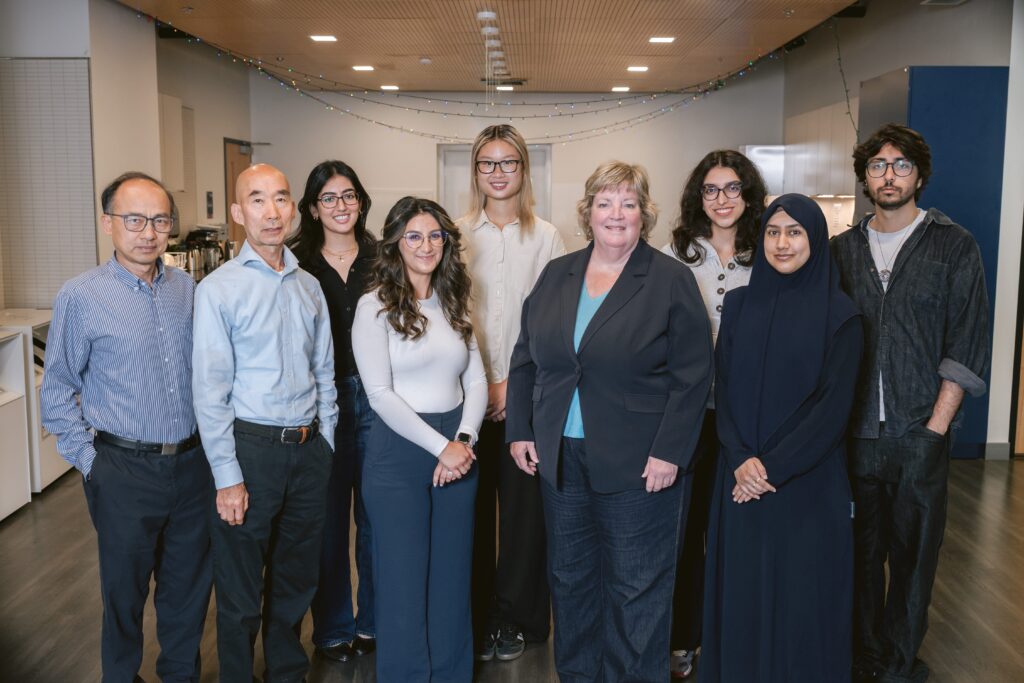
The Bendeck lab uses experimental animal models and cell culture assays to study cell-matrix remodeling in atherosclerosis, focusing on the extracellular matrix, discoidin domain receptors, and cadherins in vascular smooth muscle cell and macrophage responses to arterial injury, plaque rupture, and calcification. The lab’s central question is how smooth muscle cells in vessel walls interact with the matrix proteins surrounding them, and how signaling between cells and matrix contributes to the hardening of arteries that underlies most heart attacks and strokes. Recent work has shown that the collagen receptor DDR1 mediates diabetic vascular calcification through the PI3K/Akt/RUNX2 signaling pathway, connecting a specific cell-surface receptor to a clinically important complication of diabetes. Her studies on smooth muscle cell adhesion, migration and proliferation in collaboration with Paul Santerre have led to the development of a peptide coated angioplasty balloon to prevent restenosis. Beyond atherosclerosis, the lab studies matrix biology in pulmonary hypertension and fibrotic heart failure, extending its core interest in cell-matrix signaling across multiple forms of cardiovascular disease that share fibrotic remodeling as an underlying feature. The lab lives in the MaRS West Tower biomedical hub and works alongside other Ted Rogers Centre bioengineering groups studying cell and tissue mechanics, and cardiovascular matrix diseases.