
Cardiac Genome Clinic (CGC)
Program Overview
Our team works to identify the genetic causes of heart disease, guide treatment, and bring precision care to patients and families.
Supported by the TRCHR and Genome Canada (PCHSeq), we offer genome-wide sequencing (GWS) to individuals and families without a known cause of their heart disease. We study a range of heart conditions, including congenital heart disease, cardiomyopathies, and arrhythmias.
Our multidisciplinary team, including medical geneticists, cardiologists, genetic counsellors, genome analysts, bioinformaticians, and study coordinators, works to share knowledge and improve outcomes. Together, we are building the evidence needed to make genomic testing a routine part of clinical care.
Thank you to the 500 families who have participated so far: you are at the heart of the vital work we do.
Brochures: Mount Sinai | SickKids | UHN

Focus Areas

-
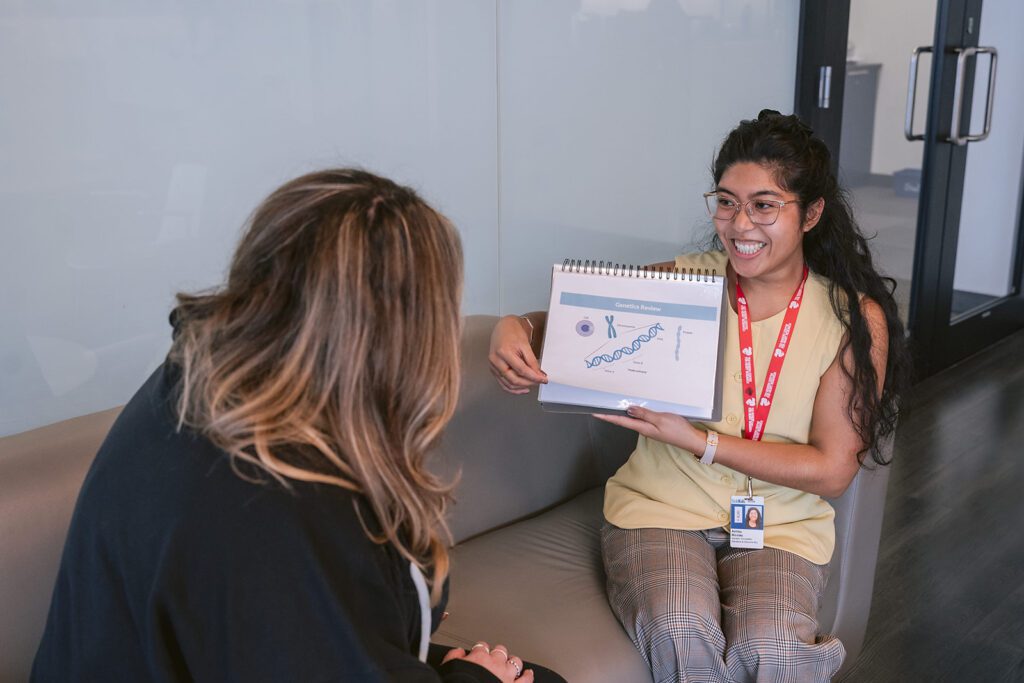
Returning results to families
Our genome-wide sequencing (GWS) program is designed to translate research findings directly into patient care. We’ve built a seamless process to return results to patients and their healthcare teams, converting genetic discovery into real clinical action.
Findings may include confirmed or suspicious genetic variants that explain why a person or their family member has heart disease, or another health condition. Participants can also choose to receive “actionable” findings unrelated to their heart condition.
Findings can then guide the next steps of clinical care and clarify whether other family members may be at risk for the same condition. We work with those participants and their families to connect them with the right specialists for follow-up care.

-
Finding the Right Medications
Our program is a pioneer in the emerging field of pharmacogenomics.
We know that some genetic variants are associated with less effective medication responses. Pharmacogenomics uses each person’s genetic makeup to identify which medications and doses would be the safest and most effective.
For example, some young patients can’t activate the medication, clopidogrel, the same way most people do. In those patients, clopidogrel may fail to prevent dangerous blood clots. These are preventable risks mitigated by pharmacogenomics but not yet routinely evaluated in a clinical setting.
-
Building new tools for public access
GeneTerpret is a bioinformatics tool published by our group and available at: Geneterpret.com for anyone to use. It saves analysts hours on every case by delivering a priority list of the genes and variants most likely to cause disease in a specific patient. Proven effective in a 2022 study, GeneTerpret makes genome interpretation significantly faster and more efficient.
Our group has also created the Suite for Copy Number Variant Interpretation and Prioritization (SCIP), a free tool that helps determine the meaning of extra or missing genomic material identified in genome-wide sequencing.
-
Leading research to understand the genetic roots of heart failure
Clinical and genomic data collected through the Cardiac Genome Clinic fuels research into the genetic causes of heart failure. This work has already deepened our understanding of congenital heart conditions, including the genetic drivers behind tetralogy of Fallot.
Resources for Families
Interested in participating but want to learn more? Discover some of the concepts of heart genetics.
-
An Introduction to Genetics and DNA(opens in a new tab)
What are DNA and genes? [01:04] -
Inheritance(opens in a new tab)
What is inheritance? [02:07] -
Heritable Traits(opens in a new tab)
What are heritable traits? [01:26]



Program Capabilities
- Genome-wide sequencing (GWS)
- Standard genetic testing services
- Returning clinically actionable results to patients and families
- Pharmacogenomic drug-gene matching
- Personalized medication and dosing guidance
- GeneTerpret bioinformatics tool
- SCIP bioinformatics tool
- Genetic counselling
- Specialist referral and follow-up care
Our Research, By the Numbers
A closer look at the numbers behind our Cardiac Genome Clinic and the impact they’re driving.
-
Participant families
500
Meet the Cardiac Genome Clinic Team
Browse our catalogue of researchers and staff at the Cardiac Genome Clinic.