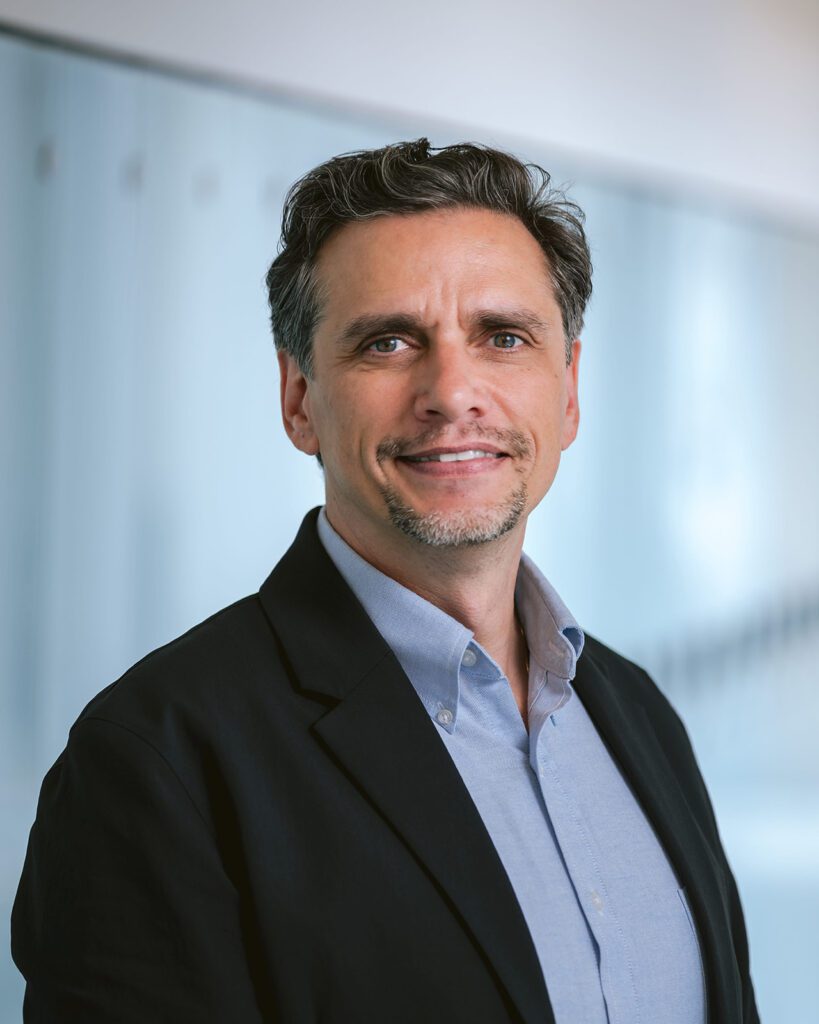
Headshot of Anthony Gramolini, researcher at the Ted Rogers Centre for Heart Research.

Anthony Gramolini

PhD

  • Professor, Department of Physiology, University of Toronto
  • Vice Chair, Research, Department of Physiology, University of Toronto
  • Director, Cardiovascular Sciences Collaborative Specialization, University of Toronto

Research Focus Areas

  • Cardiac Proteomics
  • Membrane Signaling
  • Molecular Therapeutics

Overview

Anthony Gramolini is a Professor in the Department of Physiology at the University of Toronto. His research interests centre on cardiac proteomics, calcium signaling, and molecular therapeutics, particularly calcium cycling at the sarcoplasmic reticulum and its role in cardiac and muscle disease.

Among his proudest research contributions, working with Thomas Kislinger in Medical Biophysics, his team used high-throughput proteomic methods to identify more than 500 membrane proteins on the surfaces of cardiac contractile cells, the great majority previously unstudied, opening new avenues for investigating heart function and disease. He has received the Boehringer Ingelheim New Investigator Award, the Heart and Stroke Foundation New Investigator Award, and the John Polanyi Prize, and has published more than 135 papers and given over 65 invited seminars in journals including Nature, Cell, Nature Biotechnology, and Circulation.

He completed his PhD at the University of Ottawa and postdoctoral fellowships at Duke University and the University of Toronto’s Banting and Best Department. He collaborates extensively across the Ted Rogers Centre for Heart Research’s Translational Biology and Engineering Program, working with Filio Billia, Maral Ouzounian, Douglas Lee, Slava Epelman, and Scott Heximer.

Collaborators would find his proteomics platform and cardiac muscle expertise a strong fit for projects needing molecular-level discovery tools applied to cardiovascular tissue.

Published Research

Showing 4 out of 33 results

  • Consensus statement on mass spectrometry-based proteomic analysis of cardiac tissue.

    2026 | Nature cardiovascular research

    Lundby A, Van Eyk JE, Mayr M, White MY, Kirk JA, Achter JS, Fert-Bober J, Wierer M, Mertins P, Lam MPY, Humphrey SJ, Lau E, Gramolini AO, Ge Y, Gundry RL

  • Cardiac proteomic and phosphoproteomic profiling defines clinically relevant molecular subgroups in human heart failure

    2026 | Nature Cardiovascular Research

    Omar Hamed, Cristine J. Reitz, Uros Kuzmanov, Shreya Gramolini, Mostin Hu, Jillian Halpern, Filio Billia, Anthony O. Gramolini

  • Latent Transforming Growth Factor Binding Protein ? 2 promotes microfibrillar TGF-? bioavailability to drive pathologic fibrosis in remote regions of infarcted hearts

    2026 |

    Fahad Ehsan, Michelle Di Paola, Micael Dewar, Hangjun Zhang, Uros Kuzmanov, Yu-Qing Zhou, Cristine J Reitz, Haisam Shah, Tao Wang, Jingzhi Liu, Aliya Izumi, Rundong Hu, Joanna Hendy, Fareshteh Sadat Younesi, Mark K. Friedberg, Filio Billia, Tomoyuki Nakamura, Boris Hinz, Robert P Mecham, Anthony O Gramolini, Scott P Heximer

  • Advanced physiological maturation of human iPSC-derived cardiomyocytes using an algorithm-directed optimization of defined media components.

    2026 | Nature communications

    Neal I. Callaghan, Lauren J. Durland, Wenliang Chen, Uros Kuzmanov, Maria Zena Miranda, Yu Ding, Zahra Mirzaei, Ronald G. Ireland, Cristine Reitz, Renée A. Gorman, Erika Yan Wang, Karl Wagner, Michelle M. Kim, Julie Audet, J. Paul Santerre, Anthony O. Gramolini, Filio Billia, Milica Radisic, Seema Mital, James Ellis, Peter H. Backx, Craig A. Simmons

The Cardiovascular Proteomics Laboratory

The Gramolini lab, also known as the Cardiovascular Proteomics Laboratory, investigates the discovery of novel molecular therapeutics and diagnostics for muscle diseases, using human tissue, blood, and stem cells alongside animal models, and advanced cellular imaging, proteomics, and cell biological approaches.

A central research theme is calcium cycling at the level of the sarcoplasmic reticulum, the intracellular structure responsible for storing and releasing the calcium that triggers heart muscle contraction, and how disruptions to this cycling contribute to cardiac disease.

The lab uses high-throughput proteomic and cell biology methods to identify and study membrane proteins in cardiac contractile cells, opening new avenues for investigating their roles in normal heart function and in disease; work the lab describes as laying groundwork it hopes other researchers will build on.

The lab has published in journals including Nature, Cell, Nature Biotechnology, and Circulation, and collaborates across the Translational Biology and Engineering Program.
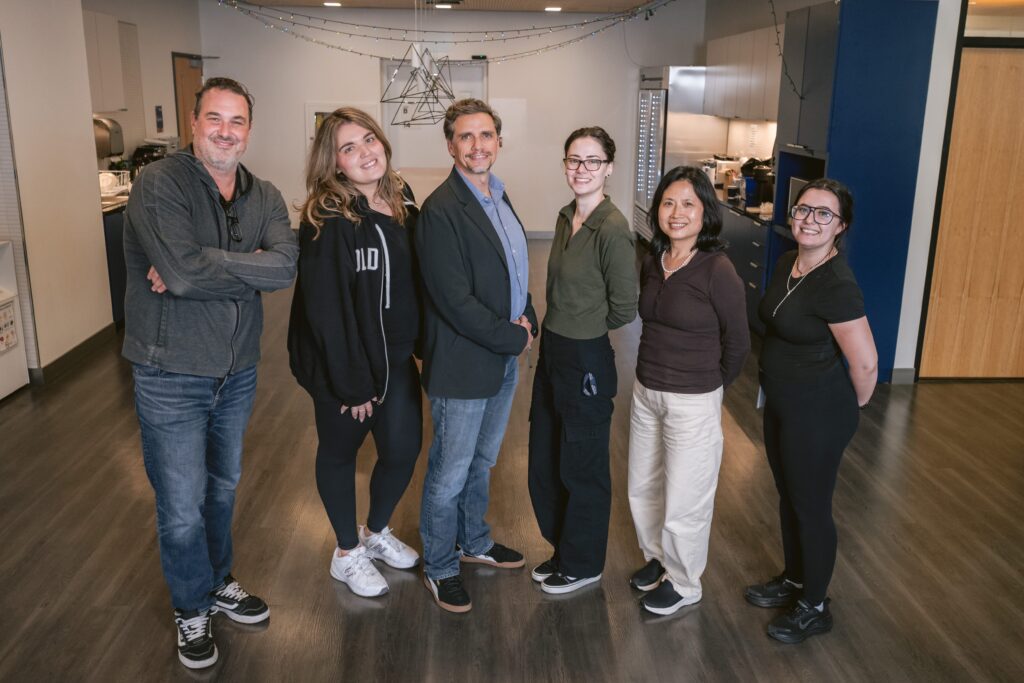
Six people standing in a row in an office space, smiling at the camera.