
Who We Are
The Gift That Started TRCHR
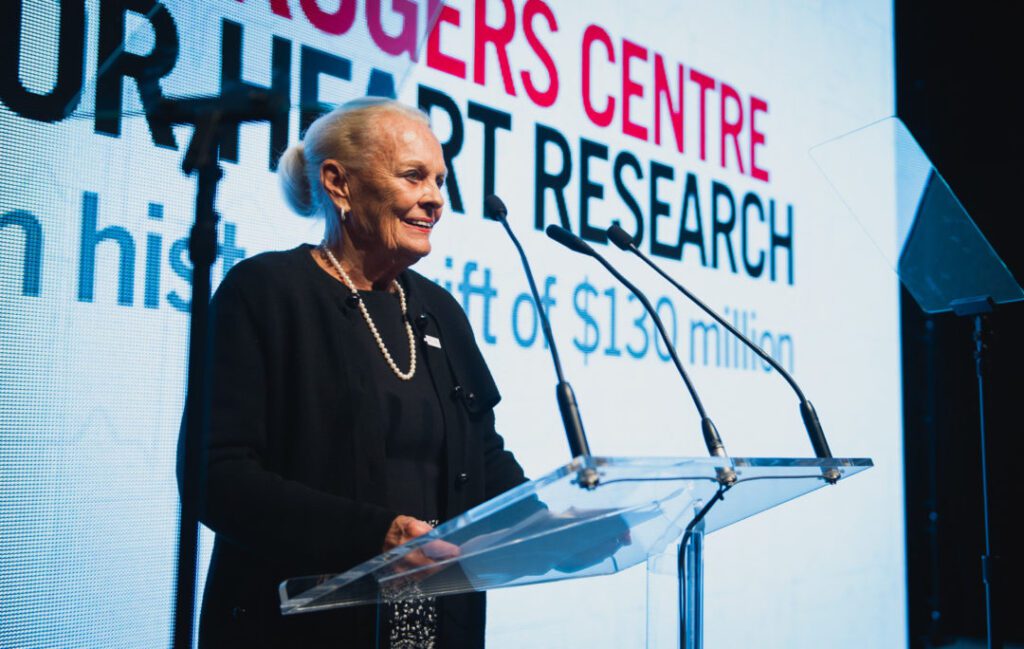
The Ted Rogers Centre for Heart Research (TRCHR) launched in 2014 after the largest private gift in Canadian health-care history united The Hospital for Sick Children, University Health Network, and the University of Toronto. Six years after visionary entrepreneur Ted Rogers died of heart failure, the Rogers family made a $130 million donation to pioneer a collaborative effort to study the disease that took him from his family too soon. Each partner institution matched the gift, creating an unprecedented $270 million commitment. “Our children and I wanted to do something very meaningful in Ted’s memory,” said Loretta Rogers at the Centre’s launch. “In the future, we want fewer Canadians to experience heart failure, and allow those who do to live much longer.” A renewed commitment in 2020, known as Rogers 2.0, has strengthened and expanded this legacy, sustaining it for generations to come. A decade later, that promise continues to drive everything we do.
Built as a True Partnership
The Ted Rogers Centre for Heart Research is the only cardiovascular research centre in the world built as a true partnership among three institutions: the University of Toronto, SickKids, and University Health Network.
Each is a leader in its field: SickKids was named the world’s best children’s hospital for a second consecutive year in Newsweek’s 2026 ranking of 250 children’s hospitals; the University Health Network was ranked No. 2 hospital system in the world by Newsweek, the highest position ever for a Canadian hospital; and the University of Toronto was ranked first in Canada and among the top 30 universities worldwide in all 11 subject areas by Times Higher Education in 2026.
Together, they bring pediatric and adult care, hospital and university research, and lab science to the same table.

Why Heart Failure, By The Numbers
Heart failure is one of the world’s most burdensome and challenging chronic diseases. It affects at least 1 million Canadians and costs the health-care system over $3 billion a year. Understanding its impact is the first step toward changing it.
-
Estimated canadians living with heart failure
750,000
Source(opens in a new tab) -
Expected healthcare costs associated with Heart Failure in canada by 2030
$2.8 Billion
Source(opens in a new tab) -
Canadians diagnosed every year
100,000
Source(opens in a new tab)
Understanding the Impact of Heart Failure


-
At least 1 million Canadians live with heart failure, and many don’t yet know they have it, meaning the true number is likely higher. Nearly half of those diagnosed will die within five years.
Life with heart failure brings fatigue, shortness of breath, swelling, and a persistent cough, changing daily life for patients, families, and caregivers alike. While most cases are currently irreversible, treatment can ease symptoms and extend life, and research is working to change what’s possible.

-
Heart failure takes a greater toll on Canada’s health-care system than almost any other disease, costing over $3 billion a year. It has the longest average hospital stay in the country, at 9 to 10 days, and newly diagnosed patients use over 26 days of hospital resources in their first year of treatment. As the fastest-rising cardiovascular disease among Canadians, its impact on our hospitals and health-care resources will only deepen without action.
Delivering on the Promise of a Healthy Heart
At the heart of our story is the promise of a healthy heart. We’re building a person-centred approach to heart failure care and prevention, one that’s no longer a lofty ambition but an achievable necessity. Over the past decade, our three founding institutions have turned that promise into real progress: faster diagnoses, more precise treatments, and better quality of life for people living with heart failure across Canada and around the world. From genome sequencing that catches disease early to remote monitoring that keeps people safely at home, our researchers, clinicians, and trainees work side by side every day to make that promise real. Watch how we’re turning research into hope.