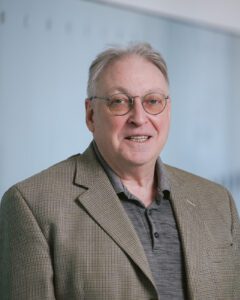
Headshot of a middle-aged man with short gray hair smiling at the camera.

Mark Friedberg

MD, PhD

  • Staff Cardiologist, Echocardiography, Division of Cardiology, SickKids
  • Senior Associate Scientist, Research Institute, Sickids
  • Professor, Paediatrics, University of Toronto

Research Focus Areas

  • Echocardiography
  • Right Ventricular remodeling
  • Rodent models
  • Ventricular Function

Overview

Mark Friedberg conducts research in the Research Echocardiography Laboratory at SickKids and in the SickKids Research Institute. He is a Professor of Paediatrics at the University of Toronto and is affiliated with the Institute of Medical Science (IMS) and the Department of Physiology. His research interests centre on echocardiography, ventricular function, and right ventricular responses to pulmonary hypertension and adverse loading. His research combines clinical and laboratory echocardiography and hemodynamics with translational laboratory research into right ventricular dysfunction, utilizing clinical studies, rodent models, and cell cultures.

Among his most significant recognitions, he has served on the editorial boards of Circulation: Cardiovascular Imaging and JACC: Cardiovascular Imaging, two of the leading journals in cardiac imaging, and as an Associate Editor of the Journal of the American Society of Echocardiography. He was awarded the 2025 Research Impact Award, Department of Paediatrics, at SickKids. He earned his medical degree at Ben-Gurion University of the Negev in Israel, completed residency training at the Soroka and Rambam Medical Centres, and trained in paediatric cardiology at Stanford University and Lucile Packard Children’s Hospital as a Glaser Pediatric Research Network fellow before joining SickKids in 2006. He obtained his PhD in Physiology at Maastricht University.

His research involves collaborations with researchers at the Ted Rogers Centre for Heart Research, the University of Toronto, and several groups internationally. Collaborators would find his combined echocardiography and laboratory research particularly valuable for linking cardiac imaging to ventricular mechanisms.

Published Research

Showing 4 out of 25 results

  • Noninvasive surrogate of main pulmonary artery stiffness is associated with right ventricular function in experimental pulmonary arterial hypertension.

    2026 | American journal of physiology. Heart and circulatory physiology

    John D. Dauz, Bahram Mirani, J. Paul Santerre, Michelle P. Bendeck, Craig A. Simmons, Mark K. Friedberg

  • Rationale and Design of an Artificial Intelligence Model for Diastolic Heart Failure (AID-HF): A Canadian Cardiomyopathy Collaborative (C3) Study

    2026 | medRxiv

    Tanya Papaz, Suhani Patel, Rajadurai Akilen, Sandar Min, Robert Lesurf, Jean-Lucien Rouleau, Matthieu Ruiz, Christopher Z Lam, Andreea Dragulescu, Mark K Friedberg, Luc Mertens, Maxime Tremblay-Gravel, Andrew D Krahn, Rafik Tadros, Seema Mital

  • Latent Transforming Growth Factor Binding Protein ? 2 promotes microfibrillar TGF-? bioavailability to drive pathologic fibrosis in remote regions of infarcted hearts

    2026 |

    Fahad Ehsan, Michelle Di Paola, Micael Dewar, Hangjun Zhang, Uros Kuzmanov, Yu-Qing Zhou, Cristine J Reitz, Haisam Shah, Tao Wang, Jingzhi Liu, Aliya Izumi, Rundong Hu, Joanna Hendy, Fareshteh Sadat Younesi, Mark K. Friedberg, Filio Billia, Tomoyuki Nakamura, Boris Hinz, Robert P Mecham, Anthony O Gramolini, Scott P Heximer

  • Current State of RV Multimodality Imaging in Pediatric Pulmonary Hypertension: Current Evidence, Knowledge Gaps, and Future Research Directions

    2026 | Circulation: Cardiovascular Imaging

    Kimberley G. Miles, Dan M. Dorobantu, Johannes Menno Douwes, Benjamin S. Frank, Pei-Ni Jone, Vivek Muthurangu, D. Dunbar Ivy, Hythem Nawaytou, Mark K. Friedberg

Research Laboratory

The Cardiovascular Ultrasound (CVUS) Research Lab, based in the Echocardiography Laboratory at the Labatt Family Heart Centre, SickKids, has developed and studied the clinical utility of newer echocardiographic techniques for diagnosing and managing paediatric cardiovascular disease since its founding in 2005. The lab is organized into three areas:

  1. A Clinical Research Lab running patient studies
  2. An Animal Lab for preclinical imaging work
  3. New Technologies in Ultrasound group developing emerging imaging methods.

Its clinical studies span conditions including Type 1 diabetes-related cardiovascular disease, complete atrioventricular septal defects in neonates, cardiac outcomes in childhood cancer survivors, right ventricular physiology after Tetralogy of Fallot repair, and long-term effects of multisystem inflammatory syndrome in children. Its animal studies use conventional and ultrafast ultrasound imaging to investigate myocardial mechanics in human studies and animal models, right ventricular stiffness in pulmonary hypertension, cerebral blood flow during cardiopulmonary bypass, and stem cell-based cardiac repair after infarct, collaborating with SickKids researchers including John Sled, Michael Laflamme, and Christoph Haller. In the translational lab, the team uses rodent models of pulmonary hypertension and right ventricular pressure loading to investigate pathophysiological mechanisms driving right ventricular responses and novel therapeutic approaches. The team uses in vitro cell culture and molecular studies to investigate the underlying molecular signalling pathways driving right ventricular remodelling in response to stress and uncover new therapeutic targets.
White lab coats with a Ted Rogers Centre for Heart Research logo hanging on a rack before a window overlooking the city, capturing life at the Ted Rogers Centre.