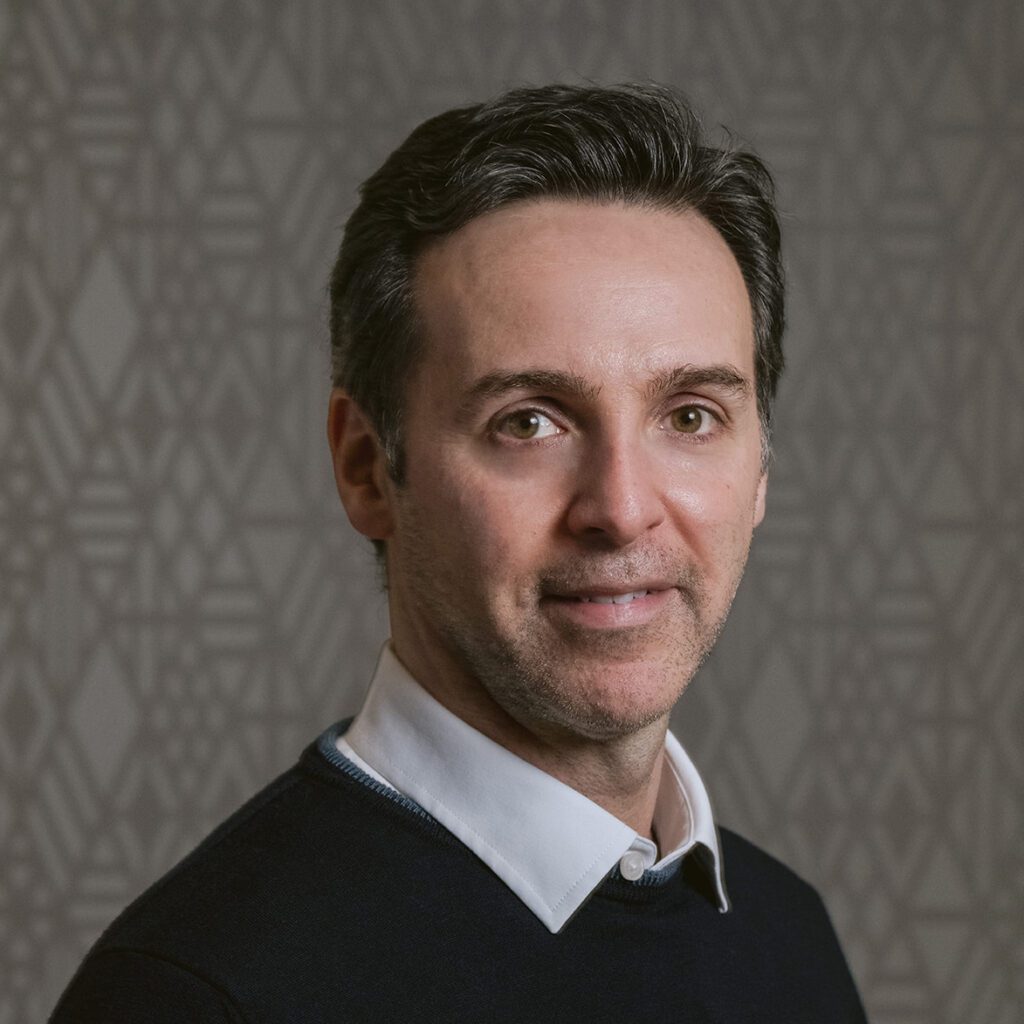
Slava Epelman

MD, PhD, FRCPC

  • Loretta Rogers Chair in Immunobioengineering, Ted Rogers Centre for Heart Research
  • Clinician-Scientist, Division of Cardiology, Peter Munk Cardiac Centre
  • Research Director & Senior Scientist, Peter Munk Cardiac Centre ,University Health Network Research Institute
  • Associate Professor, Immunology, & Laboratory Medicine and Pathobiology, University of Toronto

Research Focus Areas

  • Cardiac Macrophage Biology
  • Cardiac Regeneration
  • Myocardial Immunology

Overview

Slava Epelman, MD, PhD, is an Associate Professor of Medicine at the University of Toronto and Research Director of the Peter Munk Cardiac Centre at University Health Network. He is a cardiologist and clinician-scientist interested in how the immune system determines whether the heart adapts to injury, repairs successfully, or progresses to chronic disease. His work has focused particularly on macrophages, dendritic cells, and T cells, with an emphasis on separating protective immune responses from those that drive tissue injury. His laboratory first helped establish that resident cardiac macrophages arise from distinct developmental origins and that these populations can have fundamentally different functions during cardiac stress and repair. This work has led to a broader interest in how immune cells sense their local environment and how cardiovascular risk factors reshape those responses.

A major theme of his current research is bringing an immunologic perspective to cardiovascular disease. His group studies viral infection, hypertension, and myocardial infarction, including how combinations of these stresses alter susceptibility to cardiac injury. He is also interested in environmental influences, including the microbiome, and how they modify immune responses and chronic cardiovascular disease. His laboratory combines experimental immunology with single-cell and spatial profiling, computational biology, human tissue studies, and regenerative medicine.

The group also engineers human stem cell-derived macrophages to determine whether immune cells can be harnessed to improve cardiac tissue maturation and repair. The lab has close collaborations across the Ted Rogers Centre for Heart Research community at UHN, the University of Toronto, and SickKids, with collaborative projects spanning congenital heart disease, inflammatory cardiomyopathies, cardiac fibrosis, and tissue repair. These connections create opportunities to bring immunologic and computational approaches to a broad range of cardiovascular questions. Collaborators would find his cardiac immunology expertise particularly valuable for projects on immune-driven cardiac injury and repair.

Published Research

Showing 4 out of 66 results

  • Evaluating the temporal and sociodemographic generalizability of the emergency heart failure mortality risk grade.

    2026 | ESC heart failure

    Karem Abdul-Samad, Xuesong Wang, Peter C Austin, Husam Abdel-Qadir, Chris McIntosh, Anthony Gramolini, Muhammad Mamdani, Slava Epelman, Heather J Ross, Douglas S Lee

  • Necroptosis is a key contributor to impaired cardiac repair following myocardial infarction.

    2026 | Cell death & disease

    Razoan Al Rimon, Yingxi Li, Ilamaran Meganathan, Faqi Wang, Allan G. Murray, Gavin Y. Oudit, Slava Epelman, Xavier Clemente-Casares, Zamaneh Kassiri

  • Role of Angiotensin-Converting Enzyme 2 in Response to SARS-CoV-2 in the Host With Metabolic Dysfunction

    2026 | JACC: Basic to Translational Science

    Slava Epelman, Geethan Baskaran

  • Arterial Resident But Not Monocyte-Derived Macrophages Require Endothelial CSF1.

    2026 | Circulation research

    Marwan G. Althagafi, Hisham M. Ibrahim, Sharon J. Hyduk, Stylianos Prattas, Mark Roufaiel, Edouard Al-chami, Corey A. Scipione, Chanele K. Polenz, Sarah A. Dick, Slava Epelman, Clinton S. Robbins, Myron I. Cybulsky

Research Laboratory

The Epelman lab studies how cardiovascular injury develops and why the same stress can lead to adaptation in one setting and progressive disease in another. The major disease programs are viral myocarditis, hypertension, and myocardial infarction, with particular interest in how these conditions interact and how one form of stress can alter the response to another. The lab investigates macrophages, dendritic cells, and T cells as regulators of these responses, asking which immune populations limit injury, which amplify it, and how their functions change over time. Environmental influences, including the microbiome, are also studied as potential modifiers of cardiovascular susceptibility. These questions are addressed using experimental models, human tissues, and patient cohorts together with genetic approaches, single-cell and spatial profiling, imaging, and computational analysis. A separate regenerative medicine arm uses human stem cell-derived macrophages and engineered cardiac tissues to determine whether immune cells can be incorporated into or manipulated within regenerative therapies to improve cardiac maturation, resilience, and repair.
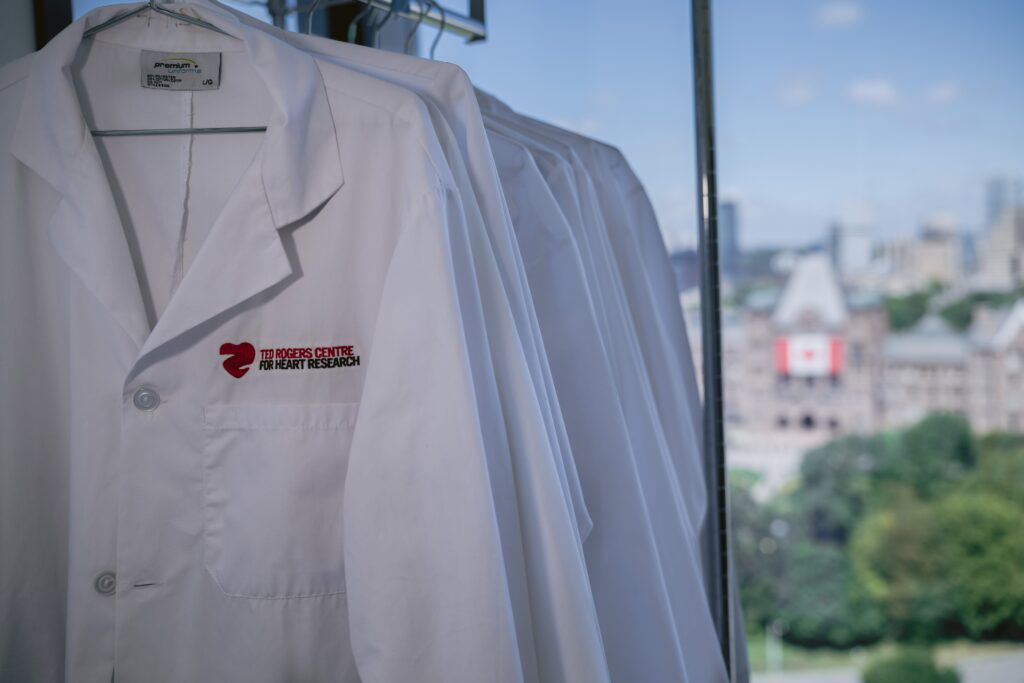
White lab coats with a Ted Rogers Centre for Heart Research logo hanging on a rack before a window overlooking the city, capturing life at the Ted Rogers Centre.