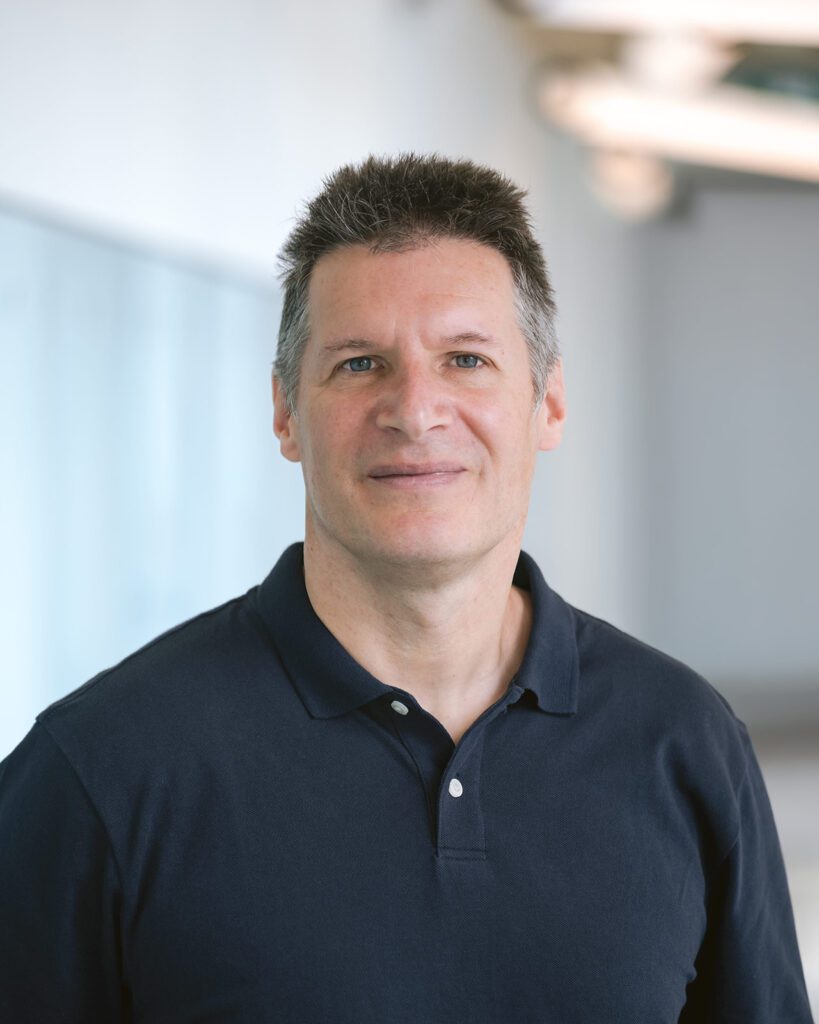
Headshot of Ian Scott, researcher at the Ted Rogers Centre for Heart Research.

Ian Scott

PhD

  • Senior Scientist, Program in Developmental, Stem Cell and Cancer Biology, SickKids
  • Professor, Department of Molecular Genetics, University of Toronto

Research Focus Areas

  • Cardiac Development
  • Gene Regulation
  • Genomics
  • Zebrafish Genetics

Overview

Ian Scott is a Senior Scientist in the Developmental, Stem Cell and Cancer Biology program at SickKids and a Professor of Molecular Genetics at the University of Toronto. His research interests centre on cardiac development, zebrafish genetics, and gene regulation, using zebrafish embryos to study how the heart is first specified during gastrulation.

Among his notable discoveries, his postdoctoral work with Didier Stainier at UCSF identified the cardiac mutant grinch through a zebrafish genetic screen, setting the direction of his independent research program, and more recently his group worked with Rebekah Jobling and the Cardiac Genome Clinic to confirm that variants in EIF3A and EIF3B cause a syndrome involving congenital heart disease, facial differences, and developmental delay, moving from an initial finding in two patients to a validated disease mechanism.

He completed his PhD at the University of Toronto and is affiliated with the Ontario Institute for Regenerative Medicine, reflecting a career-long interest in developmental and regenerative biology beyond cardiac research specifically. His research has increasingly brought him into sustained collaboration with clinical geneticists at SickKids, translating zebrafish findings into explanations for previously unexplained patient cases.

Collaborators would find his zebrafish models particularly valuable for explaining unresolved congenital heart disease diagnoses.

Published Research

Showing 4 out of 15 results

  • Heritability of Age-Related Macular Degeneration in the Amish

    2026 | medRxiv

    Moore, N. C.; Song, Y. E.; Gulyayev, A. V.; Miskimen, K.; Miron, P.; Laux, R. A.; Lynn, A.; Fuzzell, S. L.; Hochstetler, S. D.; Miller, D.; Caywood, L. J.; Clouse, J. E.; Herington, S. D.; Wang, P.; Liu, Y.; Dorfsman, D. A.; Vance, J. M.; Nittala, M. G.; Sadda, S. R.; Stambolian, D.; Scott, W. K.; Pericak-Vance, M. A.; Haines, J. L.

  • Genetic suppression features ABHD18 as a Barth syndrome therapeutic target.

    2025 | Nature

    Sanna N. Masud, Anchal Srivastava, Patricia Mero, Victoria Saba Echezarreta, Eve Anderson, Lennard van Buren, Jiarun Wei, David Thomson Taylor, Adrian Granda Farias, Nicholas Mikolajewicz, Angela Shaw, Brandon M. Murareanu, Michelle Lohbihler, Olivia Sniezek Carney, Simon van Heeringen, Linda Clijsters, Olga Sizova, Jeroen van Ameijde, Freya Nye, Andrea Habsid, Lucy Nedyalkova, Laura McDonald, Craig Simpson, Leanne Wybenga-Groot, Kevin R. Brown, Nhi Nho, Radu M. Suciu, Katherine Chan, Amy H. Y. Tong, Frédéric M. Vaz, Bastiaan Evers, Robert Lesurf, Tanya Papaz, Lauryl M. J. Nutter, Stephanie Protze, Maximilian Billmann, Michael Costanzo, Brenda J. Andrews, Chad L. Myers, Seema Mital, Hilary Vernon, Thijn R. Brummelkamp, Charles Boone, Ian C. Scott, Micah J. Niphakis, Douglas Strathdee, Sebastian M. B. Nijman, Vincent A. Blomen, Jason Moffat

  • Role of the obligate STRIPAK complex component Mob4 in zebrafish vascular development and stability

    2025 |

    Tvisha Misra, Shimon M. Rosenthal, Mengyi Song, Nathan J. Stutt, Laura McDonald, Ashish R. Deshwar, Anne-Claude Gingras, Ian C. Scott

  • Characterization of a novel zebrafish model of SPEG -related centronuclear myopathy

    2022 | Disease Models & Mechanisms

    Karla G. Espinosa, Salma Geissah, Linda Groom, Jonathan Volpatti, Ian C. Scott, Robert T. Dirksen, Mo Zhao, James J. Dowling

Research Laboratory

Research in the Scott lab focuses on how cardiac fate is first established during early embryonic development and how the heart subsequently grows and matures, using zebrafish as a model system prized for its transparency, which allows researchers to watch the heart form and begin beating in real time. The lab combines genetic, embryological, bioinformatic, and genomic approaches to identify the regulatory elements and gene networks that direct cardiac progenitor cells toward their fate during gastrulation, building on foundational postdoctoral work identifying the grinch cardiac mutant with Didier Stainier at UCSF. Beyond fundamental developmental biology, the lab increasingly partners with clinical geneticists to explain unexplained congenital heart disease cases: working with Rebekah Jobling and the Cardiac Genome Clinic, the group used zebrafish experiments to confirm that variants in EIF3A and EIF3B cause a syndrome involving congenital heart disease, facial differences, and developmental delay, moving from an initial genetic finding in two patients to a validated disease mechanism. The lab is affiliated with the Ontario Institute for Regenerative Medicine, reflecting a broader interest in developmental and regenerative biology, and collaborates with Anthony Gramolini on cardiac gene regulation questions that extend beyond the zebrafish system into mammalian models.


White lab coats with a Ted Rogers Centre for Heart Research logo hanging on a rack before a window overlooking the city, capturing life at the Ted Rogers Centre.