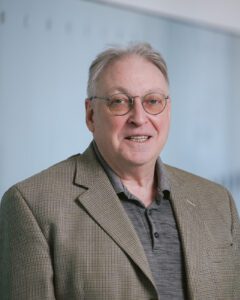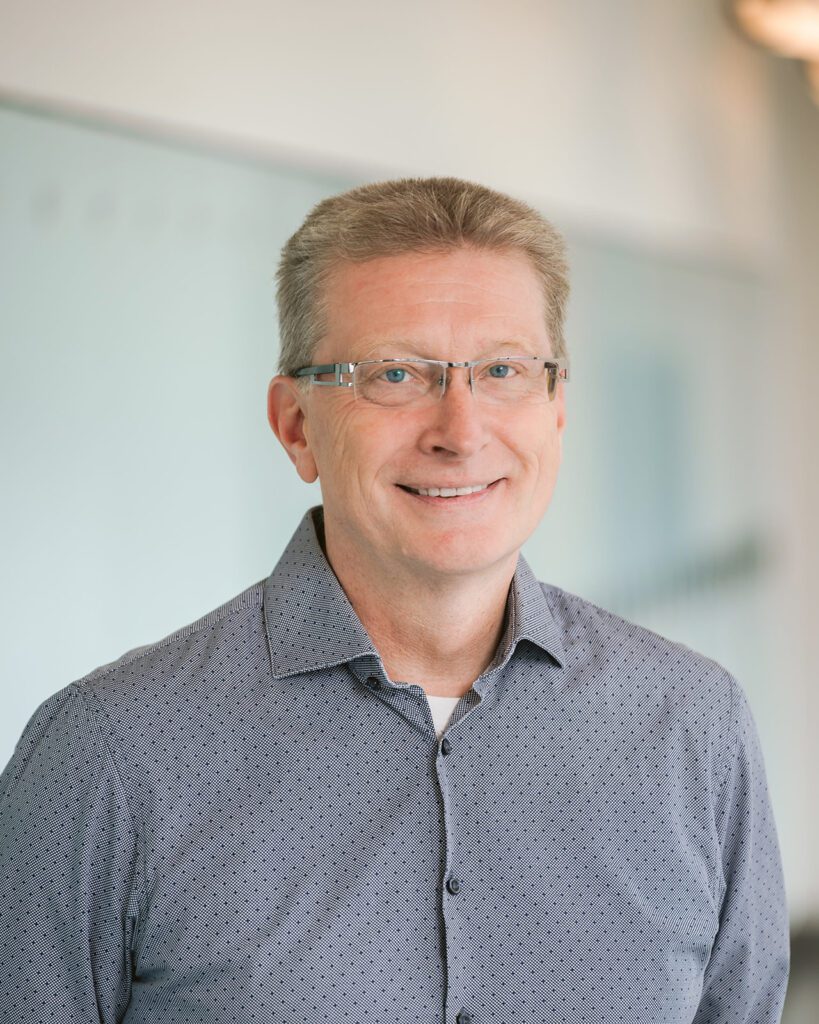
A middle-aged man with short hair and glasses smiles while wearing a collared, patterned shirt.

Boris Hinz

PhD

  • Keenan Chair in Fibrosis Research at St. Michael’s Hospital, Unity Health Toronto
  • Distinguished Professor of Tissue Repair and Regeneration, Faculty of Dentistry, University of Toronto

Research Focus Areas

  • Cell Contraction and the Cytoskeleton
  • Mechanobiology
  • Myofibroblast Biology
  • Tissue Repair and Fibrosis

Overview

Boris Hinz is the Keenan Research Chair in Fibrosis Research at St. Michael’s Hospital and a University of Toronto Distinguished Professor of Tissue Repair and Regeneration. He is appointed to the Faculties of Dentistry, Medicine, and Biomedical Engineering. Dr. Hinz earned his PhD in Cell Biology and Theoretical Biology from the University of Bonn, Germany, in 1998. From 1999 to 2002, he was a postdoctoral fellow under the guidance of Dr. Giulio Gabbiani in the Department of Experimental Pathology at the University of Geneva, Switzerland. He then led a research group at the École Polytechnique Fédérale de Lausanne (EPFL), Switzerland, where he integrated expertise in cell biology, biophysics, and bioengineering. Dr. Hinz was named Maître d’enseignement et de recherche (Assistant Professor level) in 2006 and was recruited by the University of Toronto in 2009 as an Associate Professor (now Full Professor).

Dr. Hinz is the secretary and founding board member of the Canadian Connective Tissue Society, a board member of the International Dupuytren Society, and a member of the Canadian Dupuytren Society. He has served as president and board member of the European Tissue Repair Society and was on the board of the Wound Healing Society. He is the Editorin-Chief (basic science) of the journal “Wound Repair and Regeneration,” a Section Editor of the “Journal of Investigative Dermatology,” and an editorial board member of ‘Experimental Dermatology’.

Dr. Hinz investigates the role of contractile myofibroblasts in both physiological tissue repair and pathological tissue fibrosis. The findings of the Hinz lab have been published in top-tier journals, including Cell, Nature Medicine, Nature Reviews Molecular Cell Biology, Cell Stem Cell, Nature Biomedical Engineering, and Nature Materials. His 165 peer-reviewed articles, 15 book chapters, and 2 edited books have collectively received over 41,220 citations, with an h-index of 85 (Google Scholar). He has been invited to give more than 340 seminars and conference presentations, in addition to over 430 congress abstracts presented by his trainees.

His research led to the formation of two startup companies, one focused on anti-fibrotic coatings for silicone implants and the other on innovative “soft” cell culture devices. Dr. Hinz’s research is currently supported by a multi-project Foundation Grant from the Canadian Institutes of Health Research (CIHR), along with funding from the CIHR operating funds, the Canada Foundation for Innovation (CFI), the Ontario Research Foundation (ORF), and MITACS (Mathematics of Information Technology and Complex Systems).

Collaborators would find his mechanistic myofibroblast expertise particularly valuable for projects studying fibrosis in any organ system, including the heart.

Published Research

Showing 4 out of 43 results

  • Identification and characterization of inflammatory LILR and fibrotic SPP1 macrophages in chronic lung allograft dysfunction

    2026 | bioRxiv

    Allen Duong, Sajad Moshkelgosha, Aaron Wong, Ankita Burman, Ke Fan Bei, Rayoun Ramendra, Tsukasa Ishiwata, Boris Hinz, Sonya MacParland, Mingyao Liu, Stephen Juvet, Tereza Martinu

  • Forever young: YAP and TAZ are needed for postnatal maturation of skin dermis.

    2026 | The Journal of investigative dermatology

    Neha E.H. Dinesh, Boris Hinz

  • Latent Transforming Growth Factor Binding Protein ? 2 promotes microfibrillar TGF-? bioavailability to drive pathologic fibrosis in remote regions of infarcted hearts

    2026 |

    Fahad Ehsan, Michelle Di Paola, Micael Dewar, Hangjun Zhang, Uros Kuzmanov, Yu-Qing Zhou, Cristine J Reitz, Haisam Shah, Tao Wang, Jingzhi Liu, Aliya Izumi, Rundong Hu, Joanna Hendy, Fareshteh Sadat Younesi, Mark K. Friedberg, Filio Billia, Tomoyuki Nakamura, Boris Hinz, Robert P Mecham, Anthony O Gramolini, Scott P Heximer

  • A Circuit of Mechanically Regulated Transcription Factors Balances Regenerative and Fibrotic Memory of Mesenchymal Stromal Cells

    2026 | Advanced Science

    Fereshteh Sadat Younesi, Andrew E. Miller, Li Diao, Xinying Guo, Natalie Andonian, Elham Karimizadeh, Thomas H. Barker, Boris Hinz

Research Laboratory

The Hinz lab, based in the Laboratory of Tissue Repair and Regeneration within the Matrix Dynamics Group, studies the role of contractile myofibroblasts in both physiological tissue repair and pathological tissue fibrosis. Myofibroblasts activate in response to tissue injury to repair damaged extracellular matrix through enhanced collagen secretion and contraction, a normal and necessary part of wound healing; myofibroblasts typically disappear once repair is complete, but chronic inflammation or sustained mechanical stress can trigger persistent activation, leading to excess scar tissue and reduced organ function.

The lab investigates fibrosis at multiple levels: intercellular crosstalk in fibrotic environments, mechanosensing at cell-extracellular matrix adhesion sites, mechanical activation of the pro-fibrotic growth factor TGF-beta1 from matrix stores, intracellular contraction through the actin isoform alpha-SMA, and epigenetic mechanisms that preserve a long-term mechanical memory in fibrotic tissue. This work has direct relevance to regenerative medicine, since implanted stem cells and biomaterials must contend with the same myofibroblast-driven remodeling environment that the lab studies in native tissue repair.
White lab coats with a Ted Rogers Centre for Heart Research logo hanging on a rack before a window overlooking the city, capturing life at the Ted Rogers Centre.