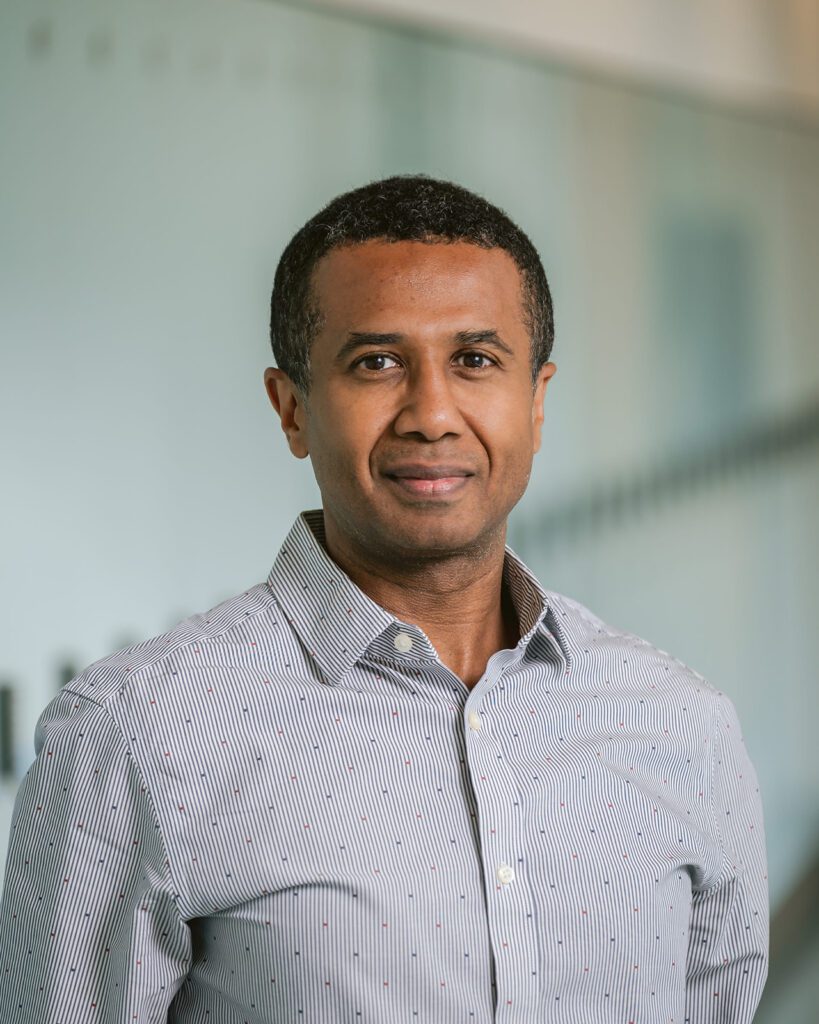
Headshot of a man with short hair wearing a pinstriped button-down shirt.

Husam Abdel-Qadir

MD, PhD, FRCPC

  • Cardiologist, Women’s College Hospital and Peter Munk Cardiac Centre, University Health Network
  • Associate Professor, Department of Medicine and Institute of Health Policy, Management and Evaluation, University of Toronto
  • Scientist, Women’s College Hospital and Ted Rogers Centre for Heart Research
  • Canada Research Chair in Cardiovascular Disease Epidemiology and Outcomes (Tier 2), University of Toronto
  • Hold’em for Life Early Career Professor in Cancer Research, University of Toronto
  • Junior Investigator, Clinical Trials and Translation Unit, Peter Munk Cardiac Centre, University Health Network

Research Focus Areas

  • Cardiovascular Epidemiology
  • Pragmatic Clinical Trials

Overview

Husam Abdel-Qadir is a cardiologist at Women’s College Hospital and the Peter Munk Cardiac Centre, University Health Network, and an Associate Professor in the Department of Medicine and the Institute of Health Policy, Management and Evaluation at the University of Toronto. He holds a Tier 2 Canada Research Chair in Cardiovascular Disease Epidemiology and Outcomes and a Hold’em for Life Early Career Professorship in Cancer Research. He is a scientist at Women’s College Hospital and the Ted Rogers Centre for Heart Research, an adjunct scientist at ICES, and a junior investigator in the Peter Munk Cardiac Centre Clinical Trials and Translation Unit.

His research aims to improve cardiovascular care for people with cancer and other conditions that complicate clinical decision-making. Combining population-based data, prospective cohorts, and pragmatic randomized trials, he studies who develops cardiovascular disease, how to identify risk earlier, and which monitoring and prevention strategies improve outcomes without adding unnecessary burden.

A central focus is preventing cardiovascular complications during cancer treatment and improving long-term survivorship. He leads the JUSTIFY trial, which evaluates risk-stratified cardiac surveillance during HER2-targeted breast cancer treatment. His broader program examines atrial fibrillation, lipoprotein(a), and differences in cardiovascular risk across populations, with an emphasis on people underrepresented in clinical trials.

His work creates opportunities for collaboration across cardiology, oncology, epidemiology, data science, and health services research. Current directions include integrating routinely collected clinical data with imaging, circulating biomarkers, and measures of physical function to develop more useful approaches to risk prediction and prevention. His contributions have been recognized through national and international research awards and the 2025 King Charles III Coronation Medal for service to cardiovascular health.

Collaborators would find his JUSTIFY trial leadership particularly valuable for cardio-oncology surveillance studies.

Published Research

Showing 4 out of 40 results

  • A Microsimulation of Eligibility for Cardiorenal Combination Treatment and Potential Deaths Averted.

    2026 | Journal of the American Society of Nephrology : JASN

    Massimo Nardone, Labib Faruque, Lisa Dubrofsky, Mai Mohsen, Matthew Cooper, Tyler D. Brown, Ann Young, Bourne L. Auguste, Husam Abdel-Qadir, Ron Wald, Frederik Persson, Ian H. de Boer, Christoph Wanner, Javed Butler, Peter Juni, Nikolaus Marx, David Z.I. Cherney, Tiago V. Pereira, Ayodele Odutayo

  • Cardiovascular Risk of First and Second Generation Bruton’s Tyrosine Kinase Inhibitors: A Systematic Review and Network Meta-Analysis

    2026 | European Heart Journal – Cardio-Oncology

    Hardil Anup Bhatt, Ibrahim Alqassas, Farid Foroutan, Rachel Lu, Mackenzie Dryburgh, Nikhila Butani, Joshua G Lee, Ani Orchanian-Cheff, Darryl P Leong, Anca Prica, Daniel Addison, Lee Mozessohn, Michael Fradley, Abi Vijenthira, Praloy Chakraborty, Kumaraswamy Nanthakumar, Paaladinesh Thavendiranathan, Husam Abdel-Qadir

  • Managing an elevated troponin in a patient on immune checkpoint inhibitors

    2026 | Canadian Journal of Cardiology

    Jonathan Sen, Malak El-Rayes, Joe-Elie Salem, Husam Abdel-Qadir, Paaladinesh Thavendiranathan

  • Reply: Ventricular arrhythmias with ibrutinib—sparse events, ascertainment, and the sudden death signal

    2026 | European Heart Journal – Cardio-Oncology

    Hardil Anup Bhatt, Ibrahim Alqassas, Farid Foroutan, Rachel Lu, Mackenzie Dryburgh, Nikhila Butani, Joshua G Lee, Ani Orchanian-Cheff, Darryl P Leong, Anca Prica, Daniel Addison, Lee Mozessohn, Michael Fradley, Abi Vijenthira, Praloy Chakraborty, Kumaraswamy Nanthakumar, Paaladinesh Thavendiranathan, Husam Abdel-Qadir

Research Laboratory

Dr. Abdel-Qadir’s research group studies cardiovascular health in people with cancer and other complex health conditions. They combine population-based epidemiology, prospective clinical cohorts, prediction methods, and pragmatic randomized trials to answer questions that arise in everyday care.

In cardio-oncology, their work seeks to identify patients at risk of cardiovascular complications, improve surveillance during potentially cardiotoxic treatment, and support healthier survivorship. The JUSTIFY trial evaluates whether cardiac monitoring during HER2-targeted therapy can be tailored to individual risk. Complementary studies explore how clinical information, imaging, circulating biomarkers, and physical function can improve early detection and prevention.

Their broader research examines atrial fibrillation, lipoprotein(a), and cardiovascular outcomes across diverse populations. They are particularly interested in how co-existing illnesses and social factors influence risk, access to care, and the applicability of clinical evidence.

Their work brings together clinicians, epidemiologists, statisticians, and data scientists across Women’s College Hospital, UHN, the University of Toronto, ICES, and the Ted Rogers Centre for Heart Research. The aim is to translate better understanding of risk into practical strategies that improve patient outcomes and reduce unnecessary care.
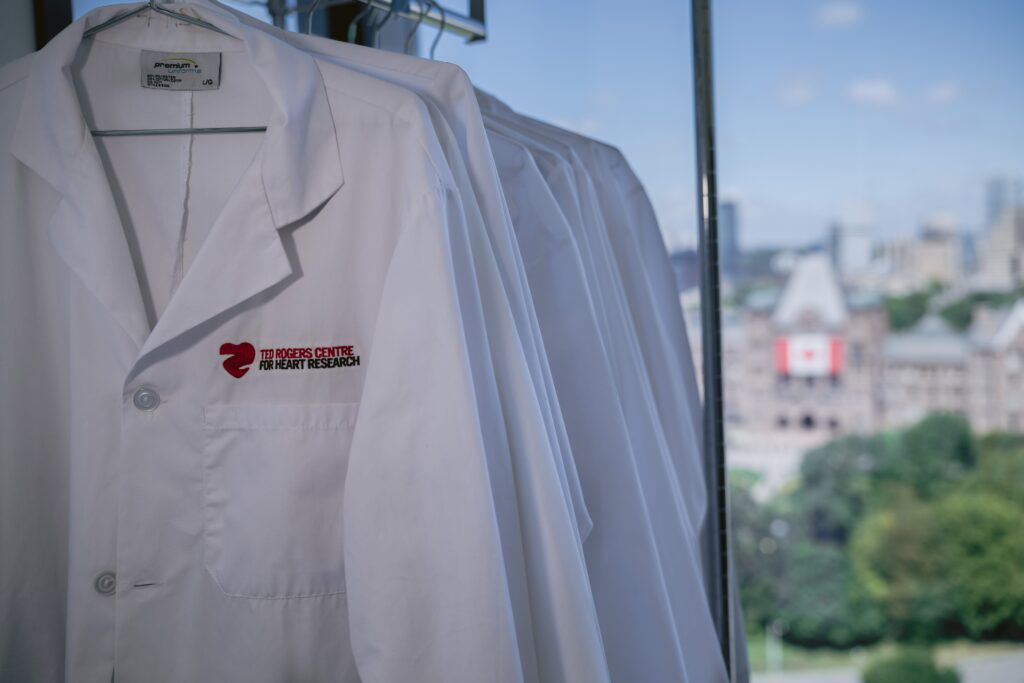
White lab coats with a Ted Rogers Centre for Heart Research logo hanging on a rack before a window overlooking the city, capturing life at the Ted Rogers Centre.