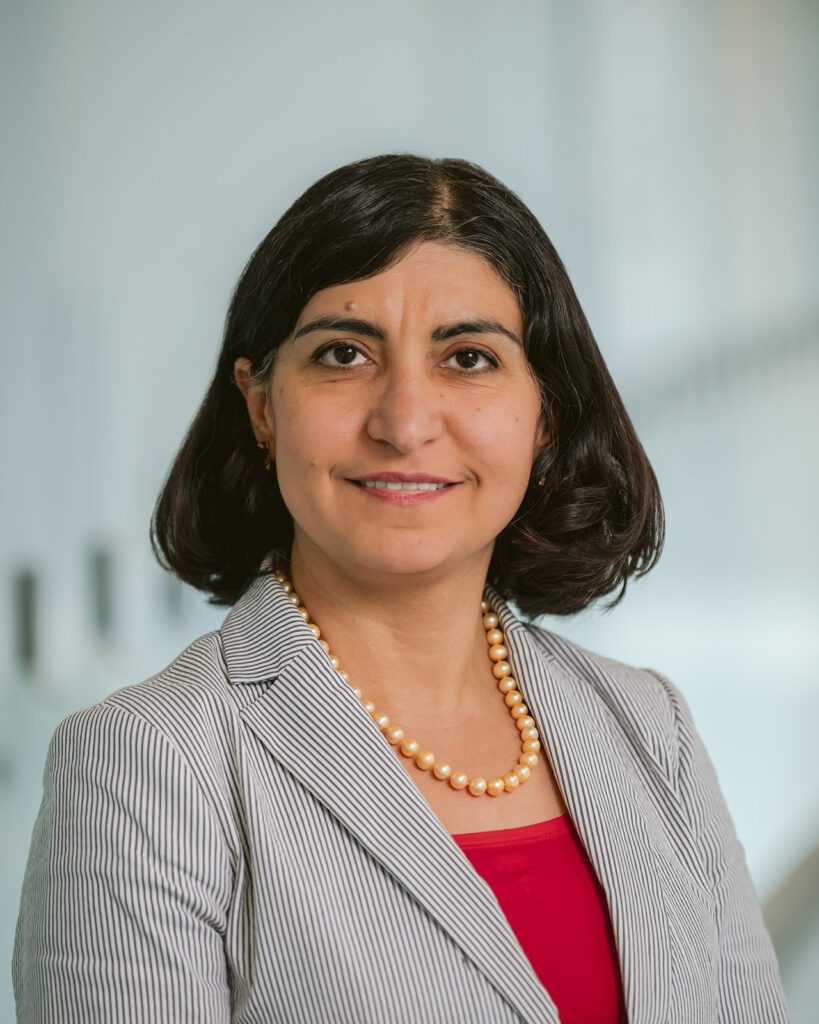
A woman with dark shoulder-length hair wearing a pinstriped blazer, red top, and a pearl necklace.

Azadeh Yadollahi

PhD

  • Scientific Director, Translational Biology and Engineering Program (TBEP), Ted Rogers Centre for Heart Research
  • Senior Scientist, KITE Research Institute, UHN
  • Associate Professor, Institute of Biomedical Engineering, University of Toronto

Research Focus Areas

  • Cardiorespiratory Engineering
  • Health Equity
  • Nocturnal Fluid Shifts
  • Wearables

Overview

Azadeh Yadollahi is the Scientific Director of the Translational Biology and Engineering Program (TBEP) at the Ted Rogers Centre for Heart Research, a Senior Scientist at the KITE Research Institute, University Health Network, and an Associate Professor at the University of Toronto’s Institute of Biomedical Engineering. Her research interests centre on cardiorespiratory engineering, sleep apnea, wearable sensors, and nocturnal fluid shifts, work that connects biomedical engineering to respiratory and cardiovascular physiology.

She holds a Tier 2 Canada Research Chair in Cardiorespiratory Engineering, a five-year renewable award recognizing exceptional emerging researchers, and directs the FabrIc-Based REsearch (FIBRE) network, developing textile-based wearables intended to provide equitable access to healthcare wherever patients are. She heads the UHN-KITE SleepdB laboratory, the first sound-proof sleep laboratory in Canada, a facility central to her work quantifying fluid shifts during sleep and their links to asthma, heart failure, stroke, and sleep apnea.

She completed her PhD in Biomedical Engineering at the University of Manitoba under Zahra Moussavi, trained as a visiting scholar at Harvard University’s School of Public Health under Jeffrey Fredberg, and completed postdoctoral training under respirologist T. Douglas Bradley at the University of Toronto and UHN. Her research connects to the Ted Rogers Centre’s TRANSFORM HF initiative through her work on wearable technologies for monitoring people with breathing difficulties during sleep.

Collaborators would find her unique sound-proof laboratory facility and textile-sensor platform of particular interest for cardiorespiratory monitoring projects.

Published Research

Showing 4 out of 9 results

  • A Machine Learning Analysis of Physiological Monitoring Signals to Detect Small Airway Narrowing Due to Cold Air Exposure in Asthma

    2026 | IEEE Journal of Biomedical and Health Informatics

    Shaghayegh Chavoshian, Yan Fossat, Xiaoshu Cao, Jaycee Kaufman, Matthew B. Stanbrook, Susan M. Tarlo, Azadeh Yadollahi

  • Self-Supervised Speech Representations for Sleep Apnea Severity Prediction

    2026 | IEEE Transactions on Biomedical Engineering

    Behrad TaghiBeyglou, Jiahao Geng, Dominick McDaulid, Papina Gnaneswaran, Oviga Yasokaran, Alexander Chow, Raymond Ng, Ronald D. Chervin, Devin L. Brown, Azadeh Yadollahi

  • Snoring Vibration: A Robust Measure for Predicting Treatment Outcome for Obstructive Sleep Apnea

    2025 | IEEE Journal of Biomedical and Health Informatics

    Behrad TaghiBeyglou, Tasnia Kamal, Fernanda Almeida, Azadeh Yadollahi

  • Unveiling the Impact of Respiratory Event-Related Hypoxia on Heart Sound Intensity During Sleep Using Novel Wearable Technology

    2024 | Nature and Science of Sleep

    Muammar Kabir, Atousa Assadi, Shumit Saha, Bojan Gavrilovic, Kaiyin Zhu, Susanna Mak, Azadeh Yadollahi

UHN-KITE SleepdB Laboratory

Yadollahi’s research program, centered on the UHN-KITE SleepdB laboratory, focuses on understanding how water accumulation in the lungs and body affects chronic cardiorespiratory diseases, advancing technologies to quantify fluid shifts during sleep and uncovering mechanisms linking nocturnal fluid accumulation to asthma, heart failure, stroke, and sleep apnea. The lab develops next-generation textile-based sensors, in partnership with leading experts and industry collaborators, that can conveniently diagnose, monitor, and treat patients with cardiorespiratory diseases in their own homes and communities, with the goal of reducing hospital admissions and improving quality of life.

SleepdB houses advanced equipment for studying the pathophysiology of chronic cardiorespiratory disorders including asthma, chronic obstructive pulmonary disease, sleep apnea, and heart failure, and the lab has also studied equity-focused questions such as sleep apnea screening in people experiencing homelessness. Other lines of research include non-contact, vision-based cardiopulmonary monitoring during sleep and the use of heart sounds and snoring acoustics as non-invasive markers of airway narrowing and cardiovascular risk.
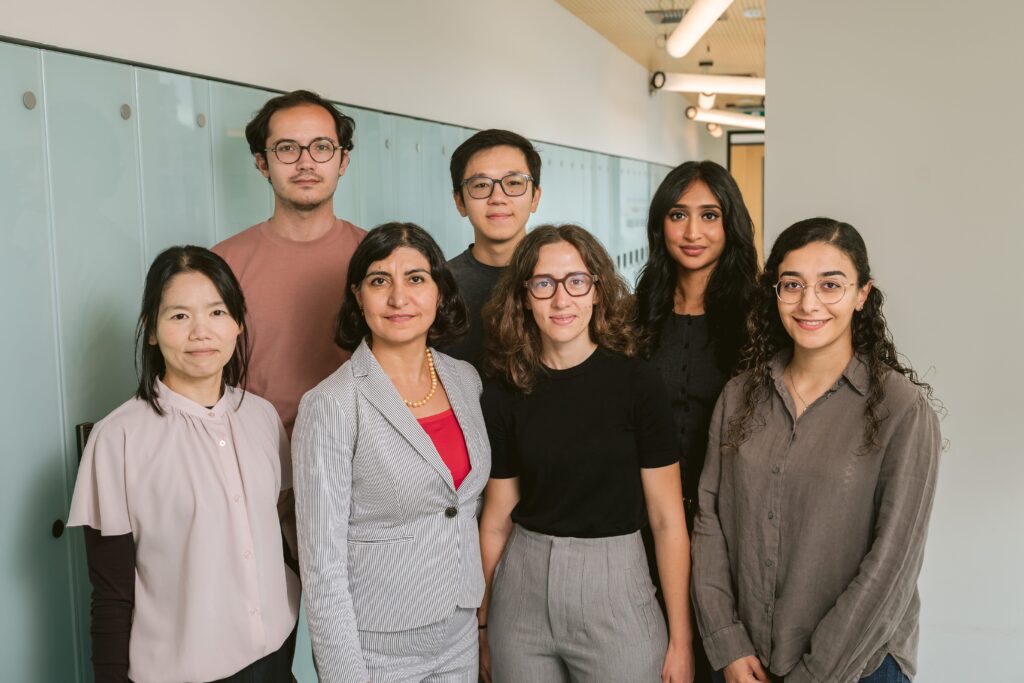
A group of six diverse professionals standing together in an office hallway.