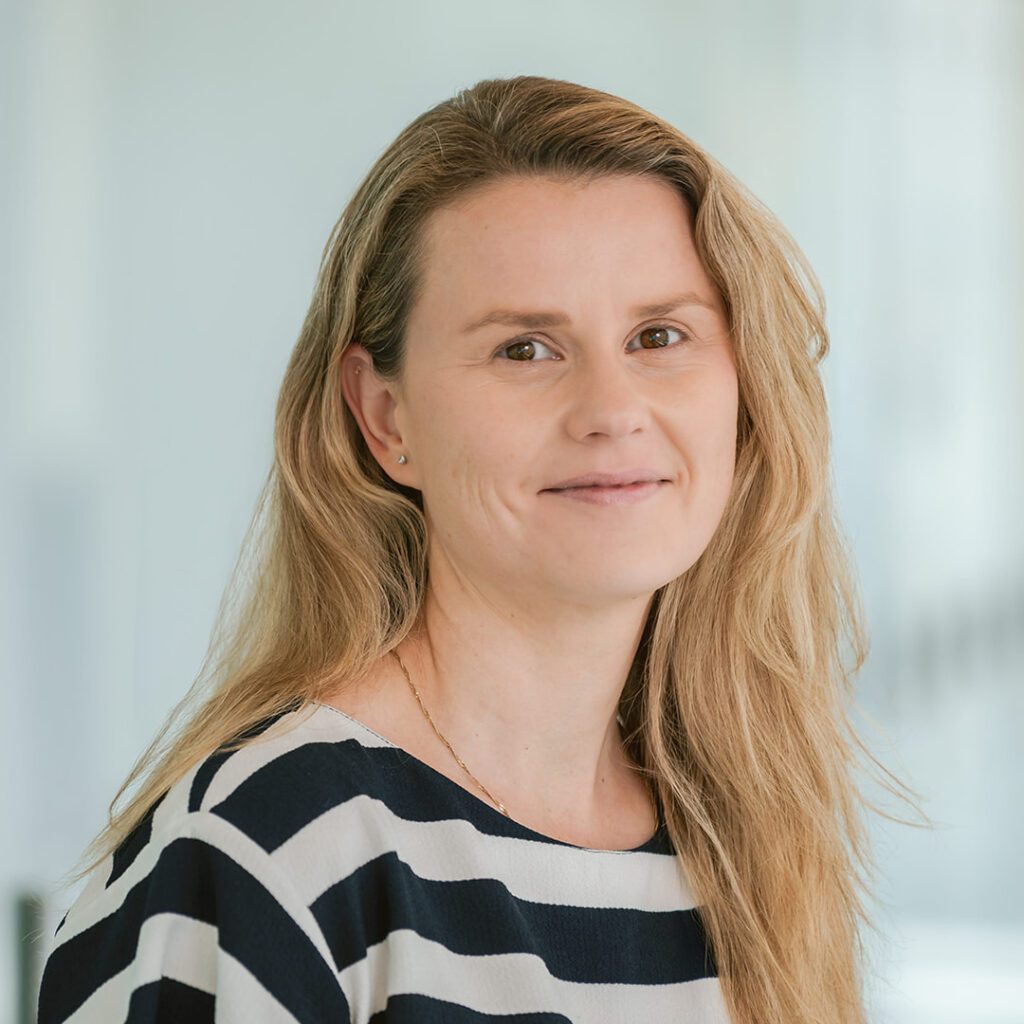
Stephanie Protze
PhD
- Senior Scientist, McEwen Stem Cell Institute, University Health Network
- Assistant Professor, Department of Molecular Genetics, University of Toronto
Research Focus Areas
- Biological Pacemaker
- Cardiac Development
- Cardiac Electrophysiology
- Disease Modeling
- Stem Cell Differentiation
Research Laboratory
The Protze Lab works to advance regenerative therapies for disorders of the heart including its electrical conduction system, leveraging human pluripotent stem cells as a model of human development and disease as well as cell source for cell therapy approaches. The lab pursues four main projects:
i) Developing biological pacemakers, led by Fereshteh Sadat Younesi and Juan Pablo Padilla Martinez , focused on the sinoatrial and atrioventricular nodes, the heart’s primary and secondary pacemakers, and working toward differentiating stem cells into pacemaker-like cells that could eventually replace electronic pacemakers, which require repeated surgical battery replacements and carry a risk of inducing heart failure.
ii) Engineering “universal survivor cells”, led by Brandon Murareanu, addresses a major obstacle in cardiac cell therapy: up to 90% of transplanted stem cell-derived heart cells die from oxygen and nutrient deprivation after a heart attack, and the lab is running genome-wide CRISPR screens to identify genes that could make transplanted cells more resistant to this ischemic environment.
iii) A novel model for human cardiogenesis and congenital heart defects, led by Matthew Chang, extends a stem cell-based gastruloid model, which recreates early stages of human development, toward heart formation, aiming to test genetic variants linked to congenital heart defects in a human context rather than relying solely on animal models that don’t always reflect human development.
iv) Modeling TMEM43 (S358L) arrhythmogenic cardiomyopathy, led by Alice Xu, is employing patient-derived induced pluripotent stem cells to study the underlying disease mechanisms and develop novel treatment strategies.
Frequent Collaborators
-

-
Rodrigo Fernandez-Gonzalez
Professor, Biomedical Engineering and Cell and Systems Biology
University of Toronto