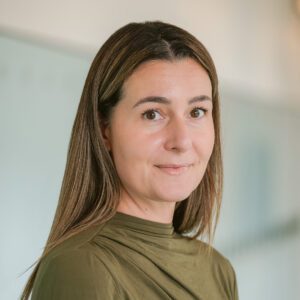
Ryan K. C. Yuen

PhD

  • Senior Scientist, Genetics and Genome Biology, SickKids
  • Associate Professor, Molecular Genetics, University of Toronto

Research Focus Areas

  • Complex disorders
  • Genomics
  • Tandem Repeat Expansions

Overview

Ryan Yuen is a Senior Scientist in the Genetics and Genome Biology program at SickKids and an Associate Professor of Molecular Genetics at the University of Toronto. His research interests center on tandem repeat expansions, genome sequencing, neurodevelopmental genetics, and cardiac genomics, developing computational methods to detect rare genetic variation genome-wide and applying them across both neurological and cardiac conditions.

He built his research program studying autism spectrum disorder: a 2020 study from his lab, published in Nature, identified thousands of tandem repeat expansions associated with autism using the MSSNG genomics database of more than 11,000 whole genome sequences, and his lab continues to investigate tandem repeats and rare variants in movement disorders, epilepsy, and schizophrenia. He has more recently extended this same tandem repeat expertise to heart disease: he co-led the first study to use whole genome sequencing to examine tandem repeat expansions in cardiomyopathy, published in eBioMedicine, finding that these variants may account for up to 4 percent of cases and identifying a correlation between expansions in the gene DIP2B and elevated disease risk.

Working with the Ted Rogers Centre for Heart Research and collaborators including Seema Mital, Tanya Papaz, and Erwin Oechslin, his team also analyzed genome sequencing data from more than 1,100 probands with congenital heart disease and contributed to a large-scale study on Tetralogy of Fallot genetics alongside Rajiv Chaturvedi, Raymond Kim, and Rebekah Jobling. He completed his PhD in Medical Genetics at the University of British Columbia in 2011 and trained with Stephen Scherer at SickKids.

Collaborators would find his tandem repeat methods particularly valuable for cases where standard genetic testing finds no cause.

Published Research

Showing 4 out of 38 results

  • Early-Onset Parkinson’s Disease with 22q11.2 Microdeletion and Pathogenic GBA1 Variant.

    2026 | Movement disorders clinical practice

    Nikolai Gil D. Reyes, Daniel G. Di Luca, Ivan Martinez‐Valbuena, Erik Boot, Maria Corral, Ryan K.C. Yuen, Connie Marras, Anthony E. Lang, Anne S. Bassett

  • Genome-wide tandem repeat expansions modify schizophrenia risk in the presence of a 22q11.2 deletion.

    2026 | Molecular psychiatry

    Cheng M, Yin Y, Engchuan W, Heung T, International 22q11.2 Brain Behavior Consortium (IBBC), Morrow BE, Bassett AS, Yuen RKC

  • Cortical myoclonus as a common and clinically actionable movement disorder phenotype of 22q11.2 deletion syndrome

    2026 | Parkinsonism & Related Disorders

    Nikolai Gil D. Reyes, Talyta Grippe, Victor S.T. Lira, Benedetta Angeloni, Naaz Desai, Connie Marras, Erik Boot, Ryan K.C. Yuen, Anthony E. Lang, Danielle M. Andrade, Robert Chen, Anne S. Bassett

  • Genomic Yield of Long-Read Sequencing in Congenital Heart Disease

    2026 | Circulation: Genomic and Precision Medicine

    Robert Lesurf, Anjali Jain, Nour Hanafi, Aleksandra Mitina, Yue Yin, Venkat A. Kolla, Jade Wilson, Tanya Papaz, Erwin Oechslin, Ryan K.C. Yuen, Seema Mital

Research Laboratory

The Yuen Lab is organized around three connected research areas. The first, tandem repeat expansions, develops and implements new technologies and computational algorithms to genotype tandem repeats (DNA sequences where two or more bases repeat immediately adjacent to one another) across large genomic datasets, since short-read whole-genome sequencing struggles to characterize these regions due to ambiguous mapping. The second, whole genome sequencing analysis of neurological disorders, investigates rare genetic variation, including single nucleotide, copy number, and tandem repeat variants, in conditions such as autism spectrum disorder, movement disorders, epilepsy, and schizophrenia, reflecting the fact that most of these disorders cannot be explained by a single gene. The third, genetic modifiers, studies how additional genetic factors can act as modifiers that produce incomplete penetrance or variable expressivity in conditions including 7q11.23 duplication syndrome, 22q11.2 deletion syndrome, and tandem repeat-related motor neuron disease. The lab has more recently extended its tandem repeat expertise to cardiac conditions, including cardiomyopathy and congenital heart disease. The lab is currently recruiting participants with unexplained paediatric-onset movement disorders for an active whole genome sequencing study, and welcomes volunteers, co-op students, graduate students, and postdoctoral fellows.

White lab coats with a Ted Rogers Centre for Heart Research logo hanging on a rack before a window overlooking the city, capturing life at the Ted Rogers Centre.