Professor, Department of Medicine, University of Toronto
Overview
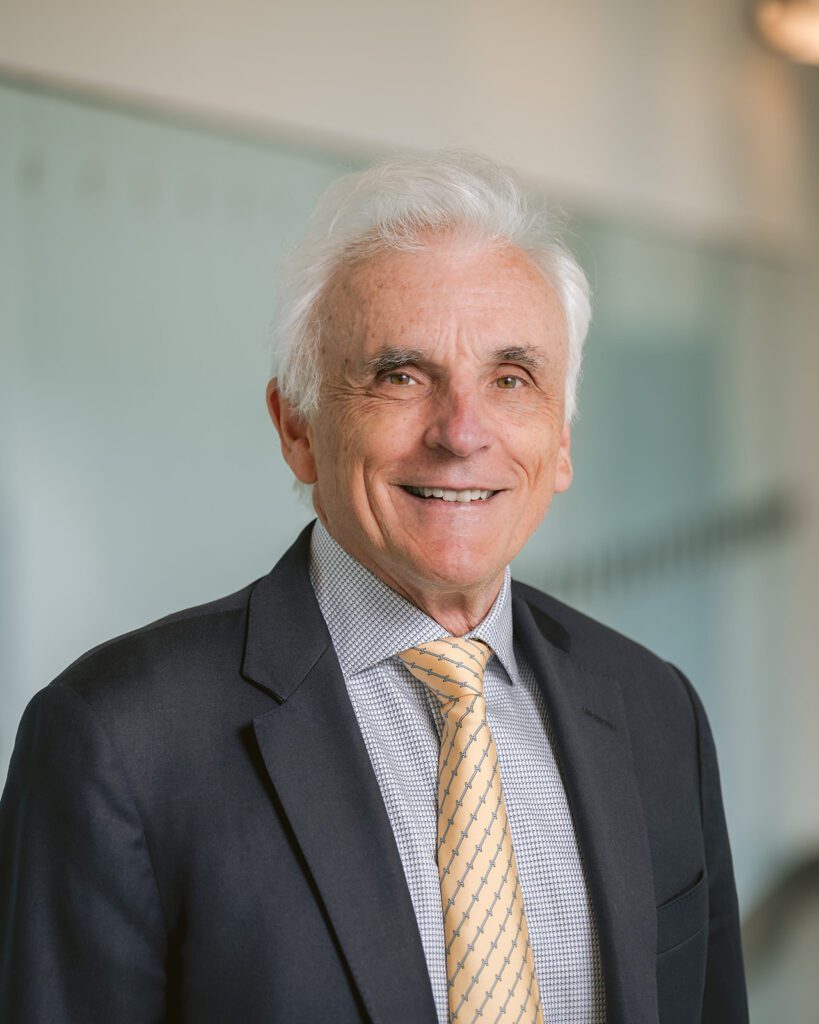
John Floras is Professor of Medicine at the University of Toronto. From 1995 to 1999, he was the Head of the Division of Cardiology at Mount Sinai Hospital. From 2004 to 2018, he held the Tier 1 Canada Research Chair in Integrative Cardiovascular Biology. His research interests centre on the sympathetic nervous system, sleep apnea, hypertension, and heart failure physiology, and he is internationally recognized as an expert in autonomic and hormonal regulation of the heart and circulation.
Career honours include the 2010 CIHR ICRH Prize in Cardiovascular Sciences, the 2011 CCS Research Achievement Award, the 2011 Department of Medicine Research Achievement Award, the 2019 Hypertension Canada Senior Investigator Award, the 2020 AHA Corcoran Lectureship, and the 2021 American Physiological Society’s Carl Ludwig Award. He served as President of the Canadian Hypertension Society from 2001 to 2002 and chaired the Board of the Banting Research Foundation from 2009 to 2015. He earned his MD at the University of Toronto and a DPhil at the University of Oxford.
He has published more than 300 peer-reviewed articles and co-edited the first textbook on Sleep Apnea and Cardiovascular Disease. His current research focuses on the paradoxical reflexes that increase norepinephrine release from sympathetic nerve endings in heart failure, the brain regions that amplify these reflex pathways in heart failure and sleep apnea, and the effects of treating sleep apnea with adaptive servo ventilation on cardiovascular mortality and hospitalization.
Collaborators would find his sympathetic nervous system expertise particularly valuable for projects examining the physiological links between sleep disorders and cardiovascular disease.
Published Research
Showing 4 out of 20 results
OSA and Atrial Fibrillation
2026 | CHEST
John S. Floras
Incidence of Dementia and Subsequent Outcomes in Patients With Heart Failure
2026 | JACC: Advances
Paul Tieu, Raed A. Joundi, Finlay A. McAlister, Moira K. Kapral, Nadia Khan, Richard H. Swartz, Clare L. Atzema, Peter C. Austin, Philip A. Barber, Filio Billia, Steffen-Sebastian Bolz, Kim A. Connelly, Jafna L. Cox, Catherine Demers, Simon Duchesne, Thalia S. Field, Jason E. Fish, John S. Floras, Daniel Franklin, Andrew C.T. Ha, Kate Hanneman, Tomi Odugbemi, Kieran L. Quinn, Frank Rudzicz, Anne Simard, Amit Singnurkar, Eric E. Smith, Sharon E. Straus, Rima Styra, Louise Y. Sun, Monica Taljaard, Joann Varickanickal, Amol Verma, Xuesong Wang, Andrew T. Yan, Shelley Zieroth, Michael D. Hill, Heather J. Ross, Gustavo Saposnik, Douglas S. Lee
Cardiovascular-Kidney Effects of Dapagliflozin in Patients at Cardiovascular Risk With or Without Type 2 Diabetes: Results of a Randomized, Double-Blind, Placebo-Controlled Trial
2026 | Hypertension
Vikas S. Sridhar, Luxcia Kugathasan, Yuliya Lytvyn, Yangqing Deng, Hongyan Liu, Leif Erik Lovblom, Josephine Tse, Massimo Nardone, John S. Floras, Tosin Osuntokun, Tomoyuki Tobushi, Ruthabella C.Y. Lam, Brian Lam, Jasper Stevens, Dylan Burger, Daan J. Touw, Hiddo J.L. Heerspink, Julie A. Lovshin, Bruce A. Perkins, David Z.I. Cherney
Reply to ‘Mechanisms of exercise sympathetic excitation in heart failure: the role of pulmonary artery mechanoreceptors’