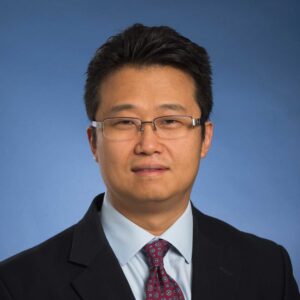
A man wearing glasses, a light blue collared shirt, and a dark blazer.

Chris McIntosh

PhD

  • Senior Scientist, Peter Munk Cardiac Centre Research Institute, University Health Network
  • Associate Professor, Medical Biophysics, Computer Science, and Medical Imaging, University of Toronto

Research Focus Areas

  • Machine Learning
  • Medical Imaging AI
  • Multimodal Learning
  • Personalized Medicine
  • Wearables

Overview

Chris McIntosh is a Senior Scientist at University Health Network’s Peter Munk Cardiac Centre Research Institute and an Associate Professor in Medical Biophysics, Computer Science, and Medical Imaging at the University of Toronto. His research interests centre on machine learning, medical imaging AI, personalized medicine, explainable AI, and multimodal learning, applied across cardiology and oncology.

Among his greatest achievements, his past work on AI-driven radiation therapy planning has received regulatory approvals and is now used directly in patient care worldwide, and his PhD dissertation on computer vision and medical image analysis received an honourable mention for top dissertation from the Canadian Image Processing and Pattern Recognition Society. He completed his BSc with honours in Computing Science and his PhD at Simon Fraser University under Ghassan Hamarneh, joined UHN’s Princess Margaret Cancer Centre in 2012, and moved into his current Peter Munk Cardiac Centre and Medical Biophysics roles in 2019.

He is also a Faculty Affiliate of the Vector Institute, and his current research includes AI and wearable technologies for heart failure management alongside his established multimodal medical imaging AI work.

Collaborators would find his track record moving AI research from development through regulatory approval into real-world clinical deployment particularly valuable for multimodal healthcare data projects.

Published Research

Showing 4 out of 32 results

  • AortoBVI: A Machine Learning-derived Risk Stratification of Ascending Aortic Aneurysms Predictable by Imaging

    2026 |

    Jennifer C-Y Chung, Farshad Tajeddini, Daniella Eliathamby, Hanfei Su, Nitish Bhatt, David Holt, Maral Ouzounian, Kate Hanneman, Christopher McIntosh, Craig A Simmons

  • Evaluating the temporal and sociodemographic generalizability of the emergency heart failure mortality risk grade.

    2026 | ESC heart failure

    Karem Abdul-Samad, Xuesong Wang, Peter C Austin, Husam Abdel-Qadir, Chris McIntosh, Anthony Gramolini, Muhammad Mamdani, Slava Epelman, Heather J Ross, Douglas S Lee

  • Machine Learning Model Using Pre-Cancer Therapy Cardiac Magnetic Resonance Images to Predict Cancer Therapy-Related Cardiac Dysfunction

    2026 | JACC: Cardiovascular Imaging

    Christopher Yu, Mohammad Peikari, Dina Labib, Christian P. Houbois, Chun-Po Steve Fan, James A. White, Eitan Amir, Kate Hanneman, Bernd J. Wintersperger, Husam Abdel-Qadir, Chris McIntosh, Paaladinesh Thavendiranathan

  • Remote monitoring of heart failure exacerbations using a smartwatch

    2026 | Nature Medicine

    Yuan Gao, Yasbanoo Moayedi, Farid Foroutan, Bhavish Verma, Ben Kim, Enza De Luca, Margaret Brum, Darshan H. Brahmbhatt, Joe Duhamel, Anne Simard, Chris McIntosh, Heather J. Ross

Research Laboratory

The McIntosh Lab develops and deploys artificial intelligence methods that directly improve patient care, working at the intersection of computer science, medical biophysics, imaging, cardiology, oncology, and clinical translation. The lab focuses on AI systems that learn from diverse medical data, including medical imaging, physiological signals, wearable sensors, structured reports, and clinical text, to support earlier detection, better treatment planning, improved workflow efficiency, and more equitable deployment across healthcare settings. A major research theme is multimodal and generative medical AI, jointly learning from imaging, electrocardiograms, echocardiography, wearable data, and clinical text to support modern healthcare decisions that require integrating many complementary data sources.

Methodologies include transfer learning, meta-learning, computer vision, and explainable AI to build clinically usable models, developed in close collaboration with clinical stakeholders who provide relevant clinical problems and large datasets of tens of thousands of images. Diseases studied include heart failure, cardiotoxicity, and cardiovascular disease more broadly, and technologies developed by the lab are used to prospectively provide patient care at UHN and globally, including an AI-driven system for automated radiotherapy care.
White lab coats with a Ted Rogers Centre for Heart Research logo hanging on a rack before a window overlooking the city, capturing life at the Ted Rogers Centre.