

Heart Failure Quality & Outcomes
Program Overview
A priority at TRCHR is delivering the best possible care to people with heart failure and their families, meaning patient-centered, timely, efficient, and equitable. We constantly strive to improve patient outcomes by integrating quality improvement concepts into clinical care, leveraging knowledge gained from research and applying it everywhere we care for patients.
Our world-leading outcomes research seeks to build predictive models and tools that reduce hospitalizations and deaths, improve quality of life, and find cost savings and innovations in the health system. We use modern statistical methods, artificial intelligence, and machine learning to explore population data, health system utilization, and individual patient factors, from a world-first emergency department risk calculator to a post-discharge care pathway that has cut emergency room (ER) returns nearly in half.
Our findings drive toward new standards of care here in Ontario and beyond to improve health outcomes for all.

Focus Areas





-
Making the Right Discharge Decisions in the Emergency Department
Heart failure patients are often admitted to the hospital from the emergency department (ED) – being one of the world’s top causes of hospitalization. However, it can be challenging for emergency (EM) physicians to know who needs immediate care and who can be safely sent home. We developed the Emergency Heart Failure Mortality Risk Grade (EHMRG), a world-first risk prediction tool that uses easily available data to predict a patient’s risk of death after seven or 30 days. By discharging low-risk patients to appropriate outpatient care, EHMRG has helped reduce all-cause deaths and rehospitalizations. The tool has since been integrated directly into UHN’s Epic electronic medical record system (EMR), a first in Canada, and is now being adopted by additional hospitals across Canada and the United States.

-
Improving Critical Care
Improving outcomes for patients in cardiac shock is a priority for our team at Peter Munk Cardiac Centre, which leads a collaborative effort using virtual “shock teams” from different hospitals to determine the best next steps for each patient. Through this pathway, patients are supported by multiple hospitals, ensuring fast, equitable care no matter which emergency department they enter. A related collaboration is working to expedite care for anyone whose coronary arteries become blocked after a heart attack, since the longer these vessels stay occluded, the worse the outcomes.
-
Setting a New Standard for Transplant Recipients
Our quality improvement team developed a list of transplant indicators to assess whether care decisions for heart transplant recipients follow best-practice guidelines. This is a unique tool that ensures high-quality care, and is being adopted by other transplant centres across Canada, with the goal of influencing national guidelines.
-
Integrated Care After Discharge
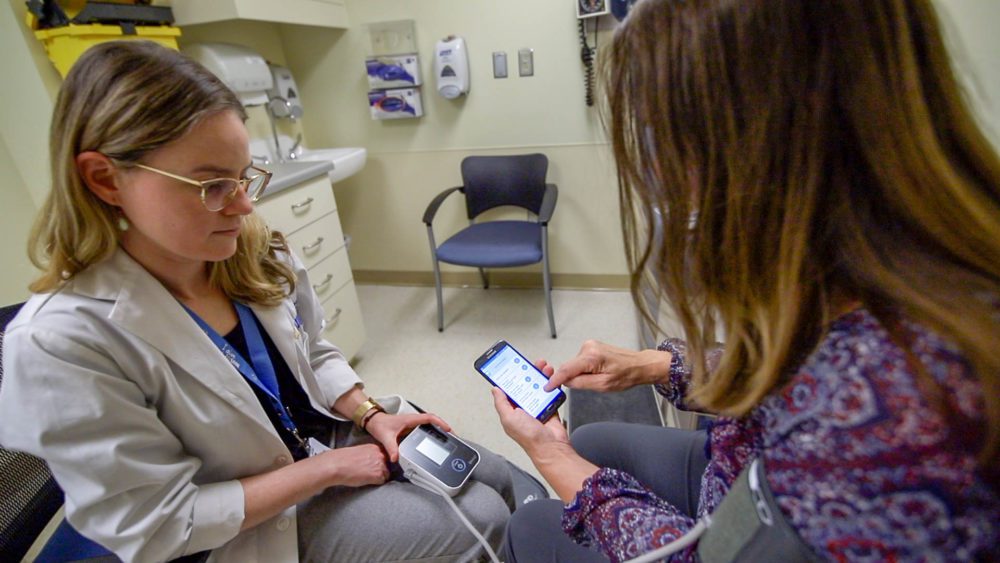
Discharge from hospital is a critical and often overwhelming moment for people with heart failure, one that raises concerns on how to manage a chronic disease outside the clinic. Our integrated care pathway leverages the Medly remote management program and expert nurse practitioners to provide enhanced support for months after someone leaves the hospital. We’ve reduced patients returning to the emergency room by approximately 50%.
-
Measuring Outcomes With Patients
A patient’s own voice and experience must be central to their care. We incorporate Patient Reported Outcome Measures (PROMS) as a routine part of ambulatory heart failure care and heart transplant, integrating this data into both patient charts and our Digital Cardiovascular Health Platform, to identify and strengthen both patient care and quality improvement initiatives.
-
Exploring the Unexplored
By funding a Ted Rogers Chair in Heart Function Outcomes and leveraging machine learning, we investigate questions that have never been studied before, from how the language patients use with their care team can help predict readmissions, to finding that early use of angiography is a valuable tool in diagnosing coronary artery disease in acute heart failure, reducing deaths and hospitalizations.
Program Highlights
Learn about some of the highlights improving Heart Failure Quality and Outcomes.
-
EHMRG: A World-First Risk Calculator, Now in Every UHN ED(opens in a new tab)
The first mortality risk tool of its kind, integrated directly into an electronic medical record system in Canada.

Program Capabilities
- Emergency Heart Failure Mortality Risk Grade (EHMRG)
- Virtual multi-hospital “shock team” collaboration
- Transplant quality indicator development
- Integrated post-discharge care pathway
- Patient Reported Outcome Measures (PROMS)
- Machine learning-driven outcomes research
- HeartLogic remote monitoring integration
- Electronic medical record integration (Epic)
Our Research, By the Numbers
A closer look at the numbers behind our Heart Failure Quality and Outcomes and the impact they’re driving.
-
fewer ER returns
~50%
-
patients in COACH trial
5,000+
-
mortality risk prediction
7- & 30-day