Cardiotoxicity Prevention Program
Program Overview
Cancer therapies that save lives can also harm the heart. The Cardiotoxicity Prevention Program — Canada’s largest program of its kind — is focused on people at risk of, or experiencing, heart complications from cancer therapy. By studying how this heart damage develops, and through early detection, prevention, and long-term care, we work collaboratively to find the optimal cancer therapy for each person.
Our goal is to help people with cancer avoid a second life-threatening illness: heart disease. This program cares for more than 3,500 patients each year at the Peter Munk Cardiac Centre. Our team also publishes research, contributes to clinical guidelines, presents at major conferences, and trains the next generation of cardiologists in this specialized field of cardio-oncology.
From developing the world’s first risk prediction model for breast cancer patients to leading multinational imaging trials, our work is setting new standards for how cancer survivors protect their heart.
Focus Areas

-
Better Patient Outcomes
We assess and manage each person’s cardiovascular risk, existing heart disease, and cardiac events that occur during cancer treatment. Our program has directly improved patient outcomes: among women with breast cancer whose therapy puts them at high risk, the incidence of heart failure in our clinic has dropped by approximately 50% compared to historical rates. We also target emerging areas of need with specialized services, including our clonal hematopoiesis clinic, which treats people at greater genetic risk for both cancer and heart disease.

-
Collaborating for Key Discoveries
Our researchers conduct studies to recognize and prevent heart disease in people with cancer, and our work has helped establish the burden of heart failure linked to common breast cancer therapies. We draw on the Peter Munk Cardiac Centre Biobank to test new ideas and the Centre’s Data Science and Machine Learning program to generate answers from an ever-expanding data lake. We’ve also laid the foundation for major multicentre international collaborations. In the landmark SUCCOUR trial, which compared imaging strategies to prevent heart failure in cancer patients, we recruited twice as many participants as the next-highest centre among 26 around the world.
-
New Avenues to Understand Risk
Our team developed the world’s first risk prediction model to identify people with breast cancer at risk for heart disease five and ten years into the future, allowing clinicians to proactively manage those at highest risk of cardiotoxicity, even before cancer therapy begins. Another key study, the largest of its kind to date, focused on people with leukemia receiving targeted cancer therapy, providing new data on the association between cancer therapy and arrhythmia, bleeding, and heart failure, and identifying the first known link between specific blood cell mutations and cardiovascular disease risk following treatment.
-
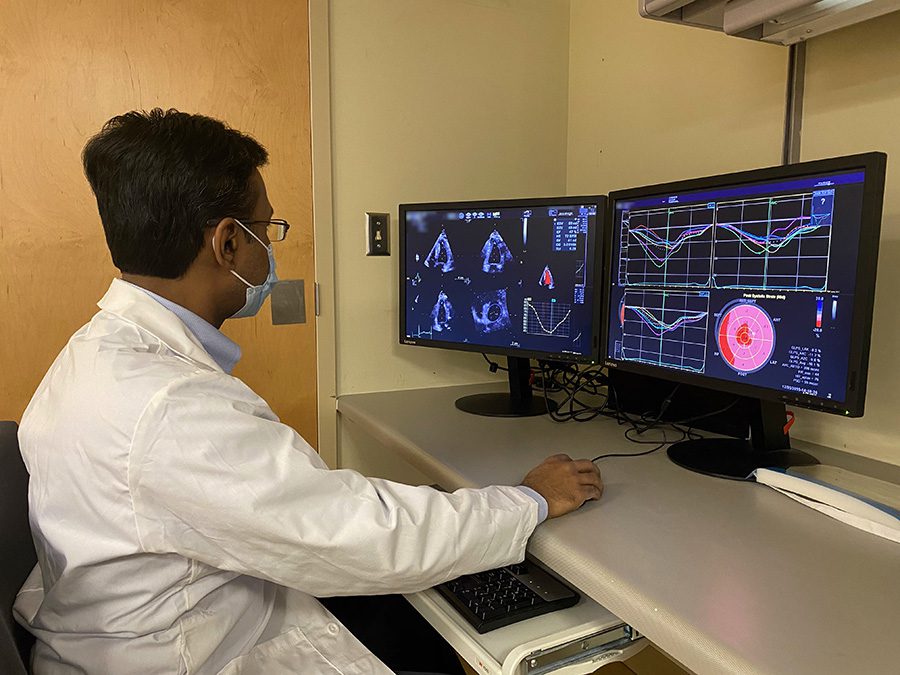
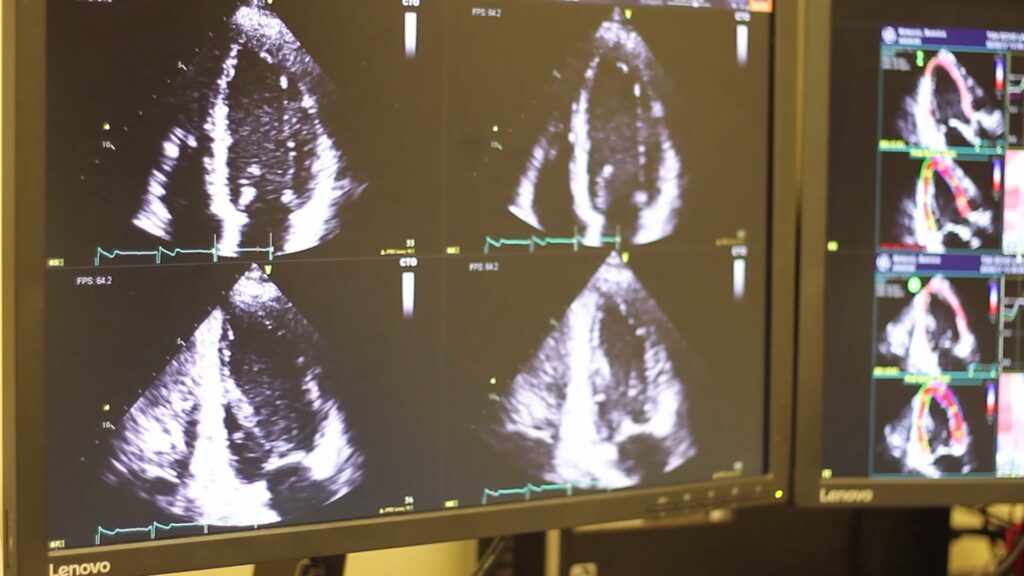
We’re shaping the next generation of specialists and physicians through a fellowship training program in cardio-oncology. For many cardiology residents, it’s their first exposure to this clinical challenge. We also work to expand global knowledge in this field so people everywhere can receive better-optimized care, including a free online module that helps clinicians anywhere understand and measure “strain” using echocardiography.
Program Capabilities
- Cardiotoxicity risk assessment
- Cardiac event monitoring during cancer therapy
- Breast cancer heart-disease risk prediction model
- Multicentre international clinical trials
- Biomarker and imaging research
- Exercise rehabilitation for young cancer survivors
- Echocardiography “strain” measurement training
- Cardio-oncology fellowship training
Our Research, By the Numbers
A closer look at the numbers behind our Cardiotoxicity Prevention Program and the impact they’re driving.
-
patients cared for each year
3,500+
-
drop in HF for high-risk patients
~50%
-
in research funding secured
$12M+
Meet the Cardiotoxicity Prevention Team
Browse our catalogue of researchers and staff at the Cardiotoxicity Prevention Program.
-
Paaladinesh Thavendiranathan
Director, Ted Rogers Program in Cardiotoxicity Prevention
University Health Network
-
Husam Abdel-Qadir
Cardiologist, Women's College Hospital and Peter Munk Cardiac Centre
Women's College Hospital